Card News

NEWS
KOTI - Korea Transport institute
Feeds and Updates
Transportation policies for addressing low birth rates need to move closer to real-life “use.”
January 23 2026
-
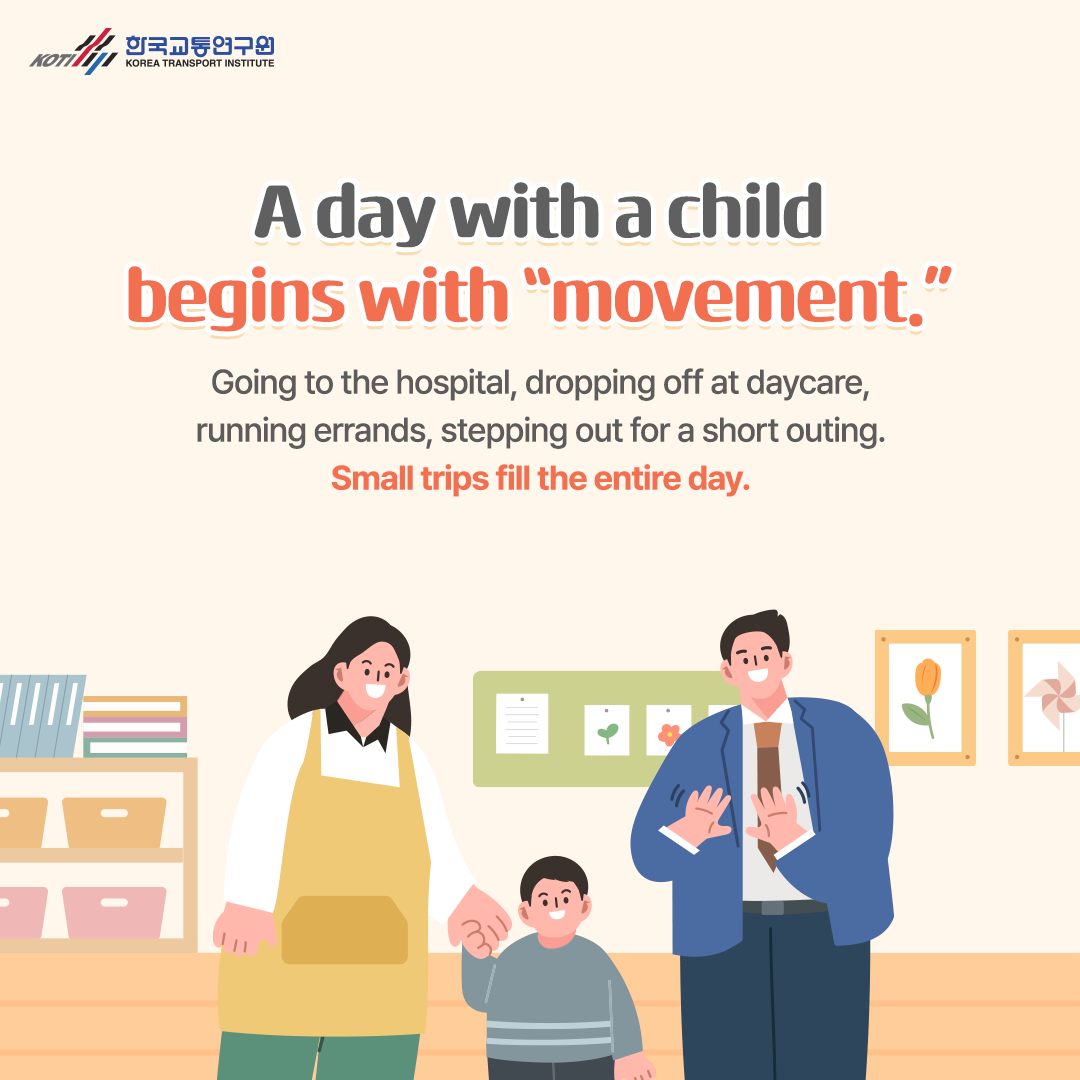
A day with a child begins with “movement.”
Going to the hospital, dropping off at daycare, running errands, stepping out for a short outing.
Small trips fill the entire day.
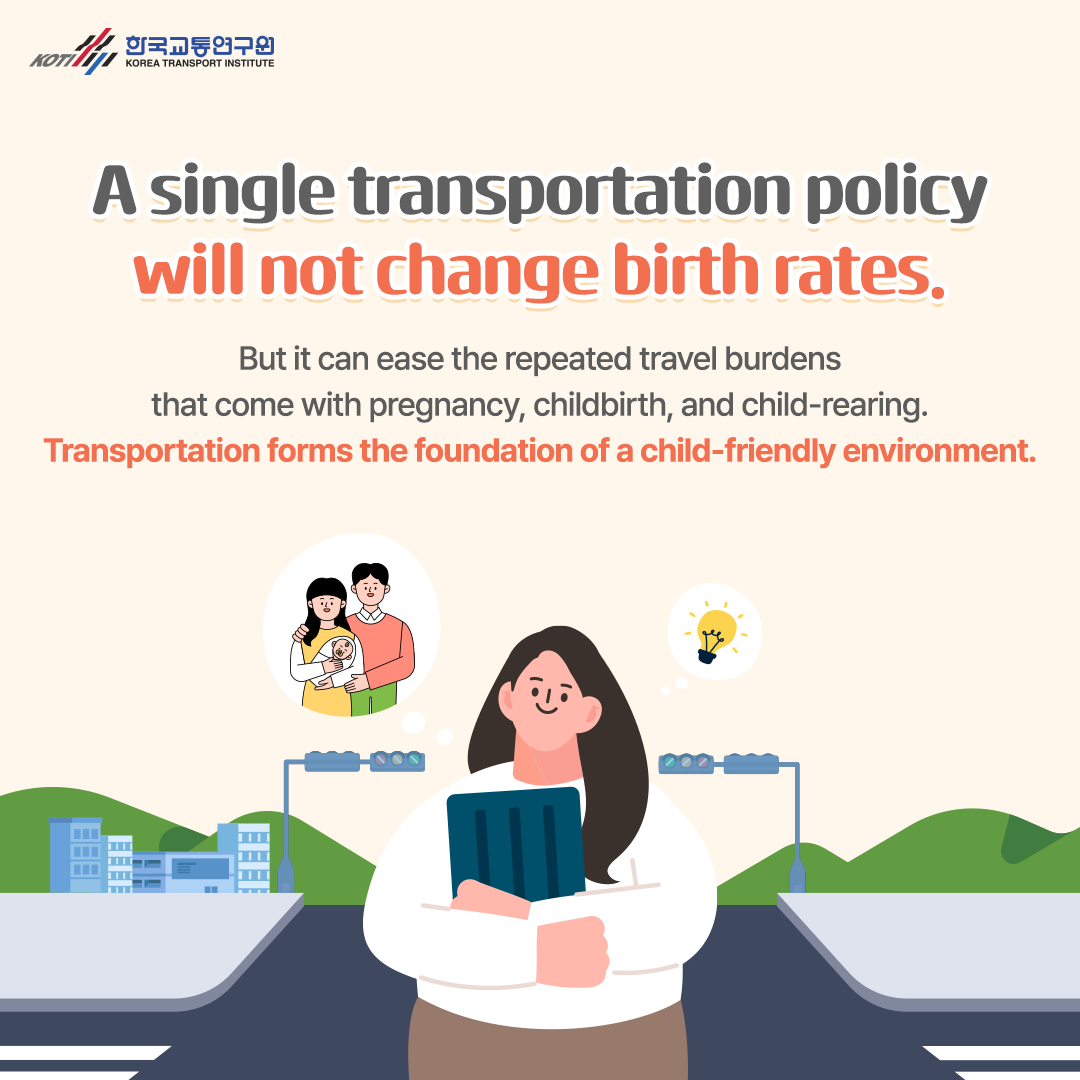
A single transportation policy will not change birth rates.
But it can ease the repeated travel burdens that come with pregnancy, childbirth, and child-rearing.
Transportation forms the foundation of a child-friendly environment.
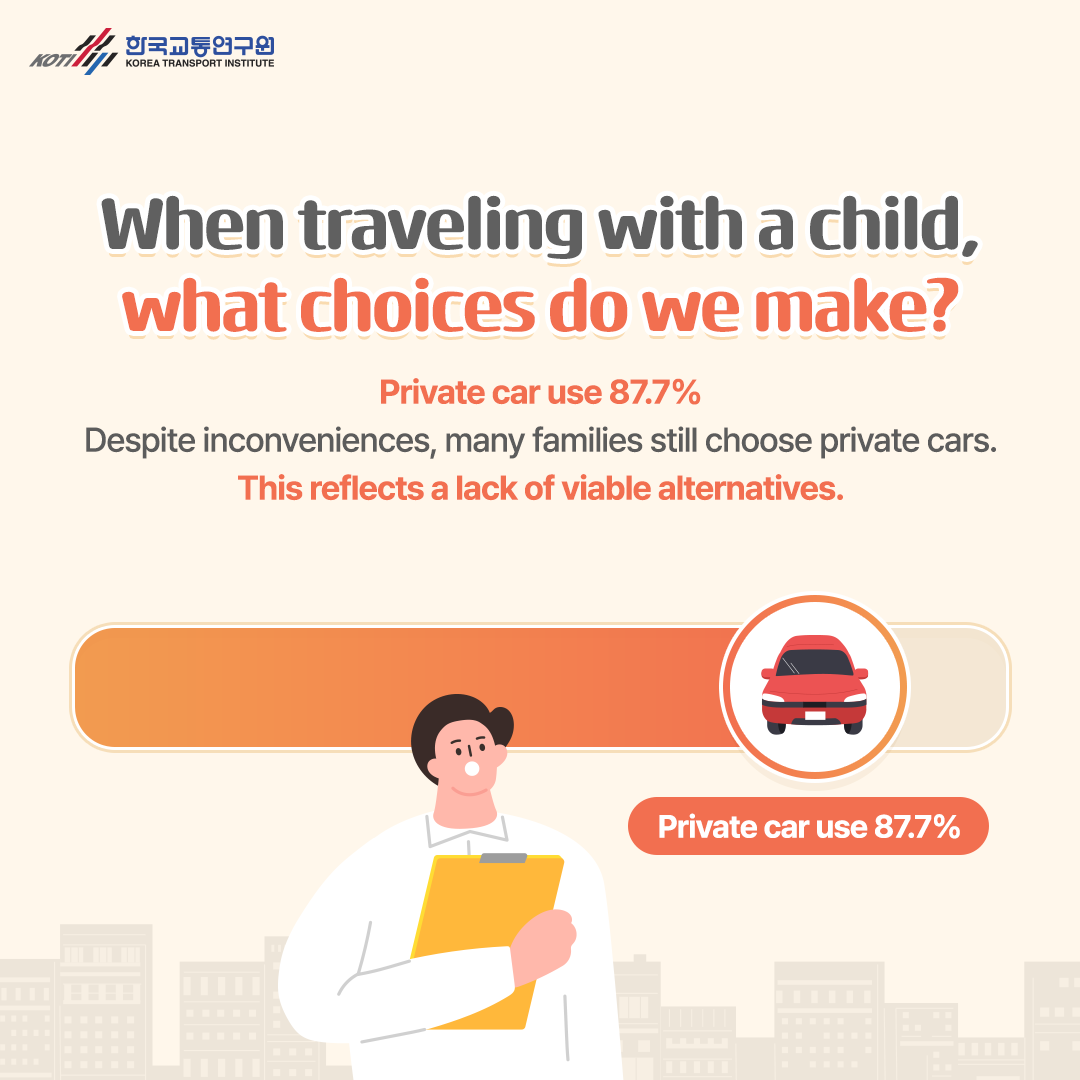
When traveling with a child, what choices do we make?
Private car use: 87.7%.
Despite inconveniences, many families still choose private cars.
This reflects a lack of viable alternatives.
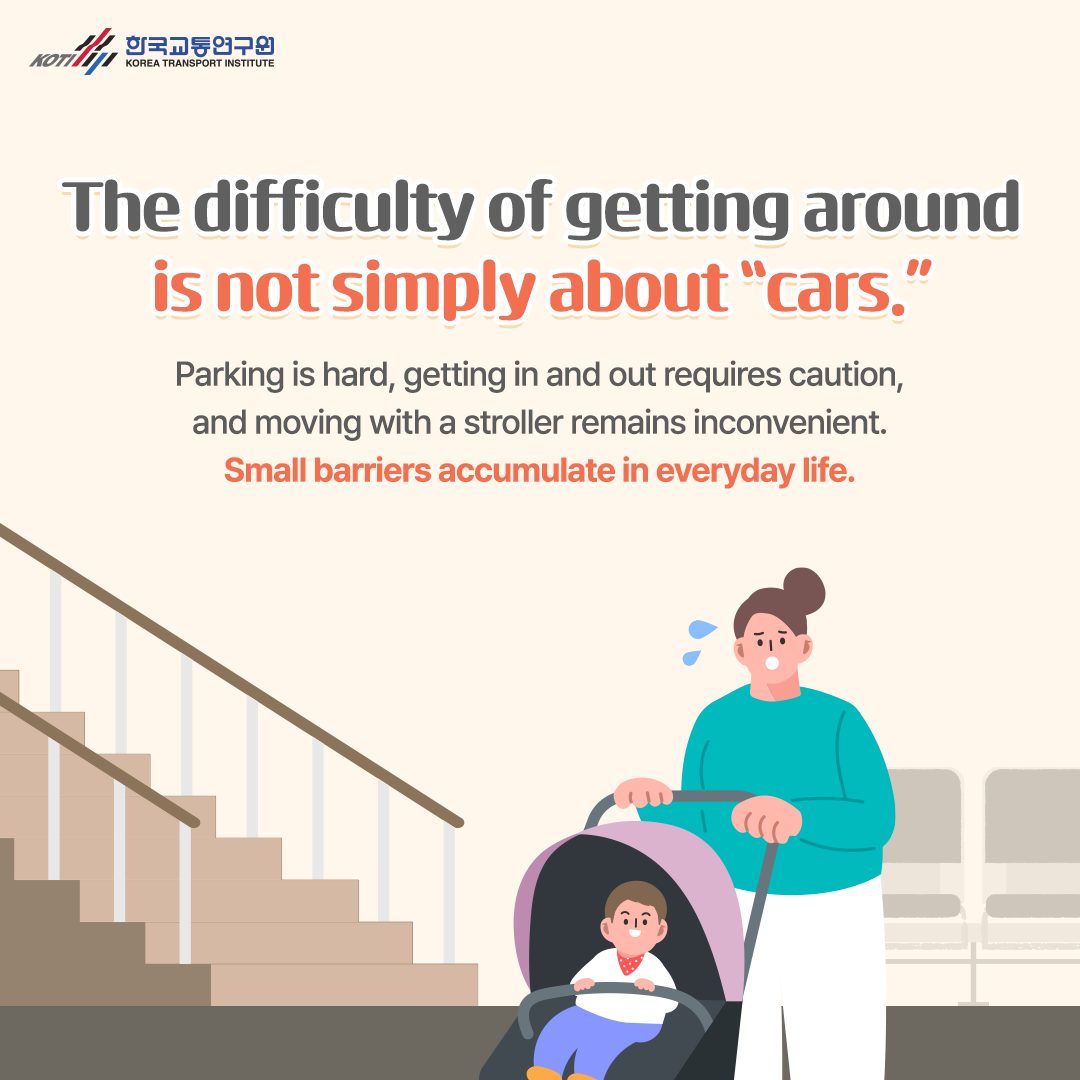
The difficulty of getting around is not simply about “cars.”
Parking is hard, getting in and out requires caution, and moving with a stroller remains inconvenient.
Small barriers accumulate in everyday life.
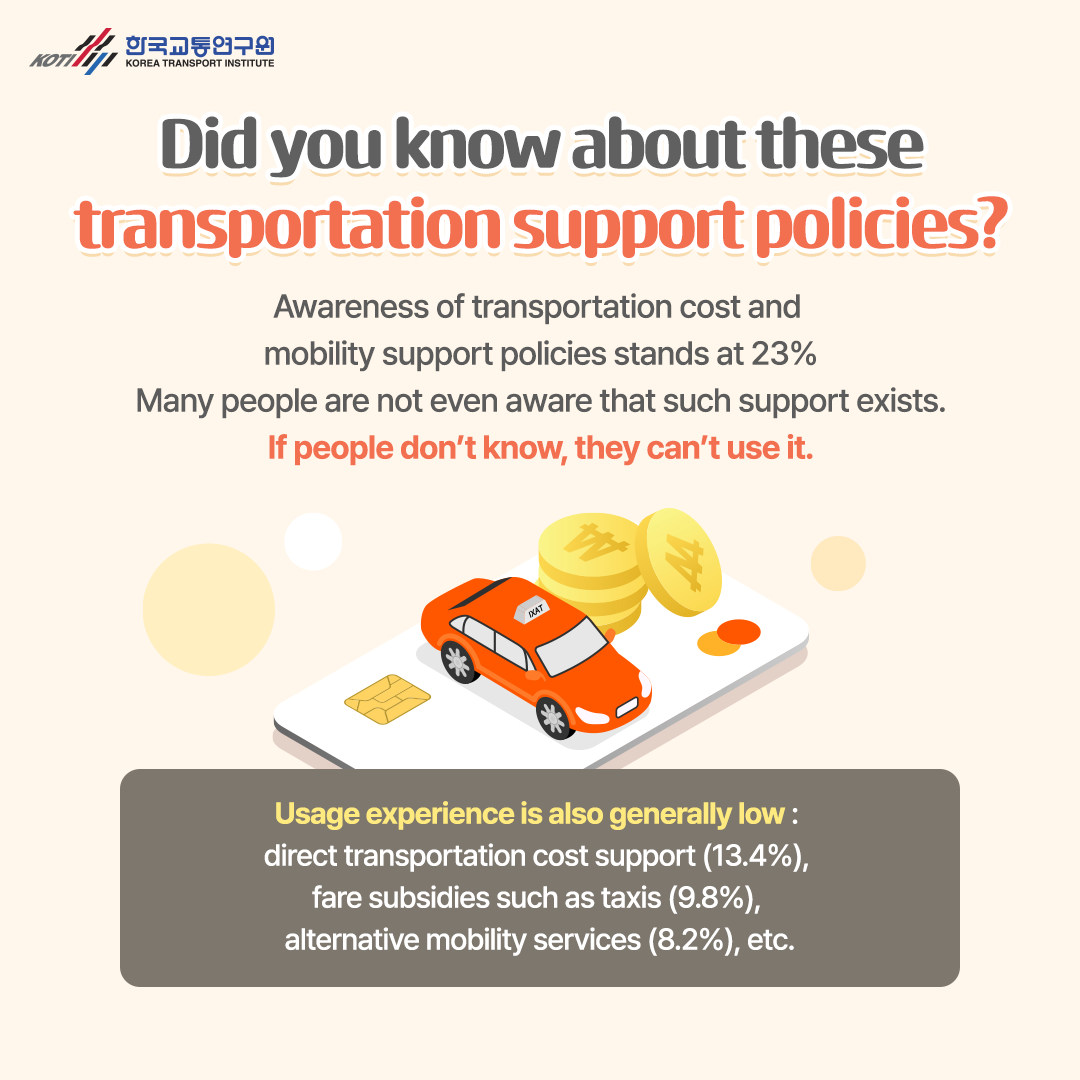
Did you know about these transportation support policies?
Awareness of transportation cost and mobility support policies stands at 23%.
Many people are not even aware that such support exists.
If people don’t know, they can’t use it.
(Usage experience is also generally low: direct transportation cost support (13.4%), fare subsidies such as taxis (9.8%), alternative mobility services (8.2%), etc.)
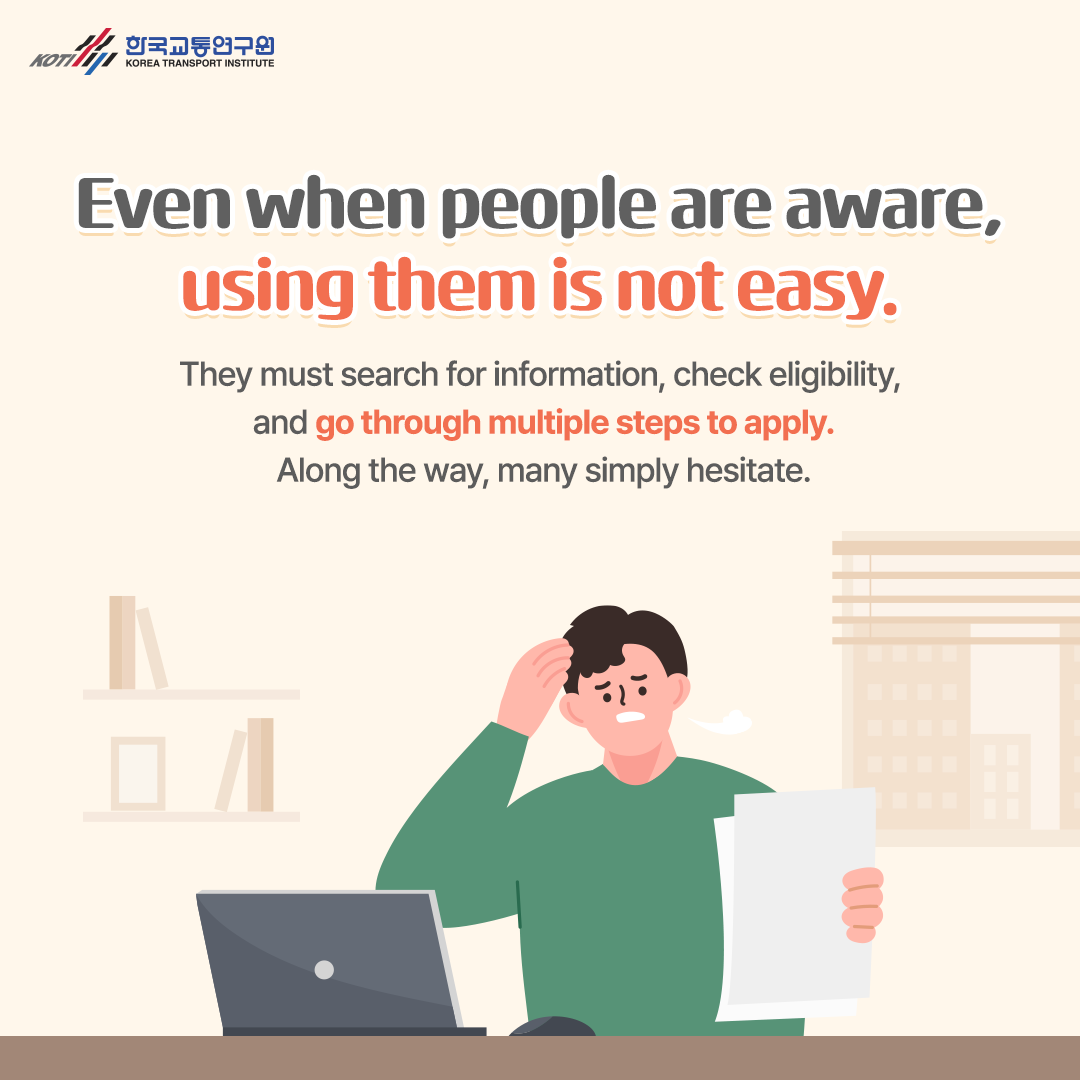
Even when people are aware, using them is not easy.
They must search for information, check eligibility, and go through multiple steps to apply.
Along the way, many simply hesitate.
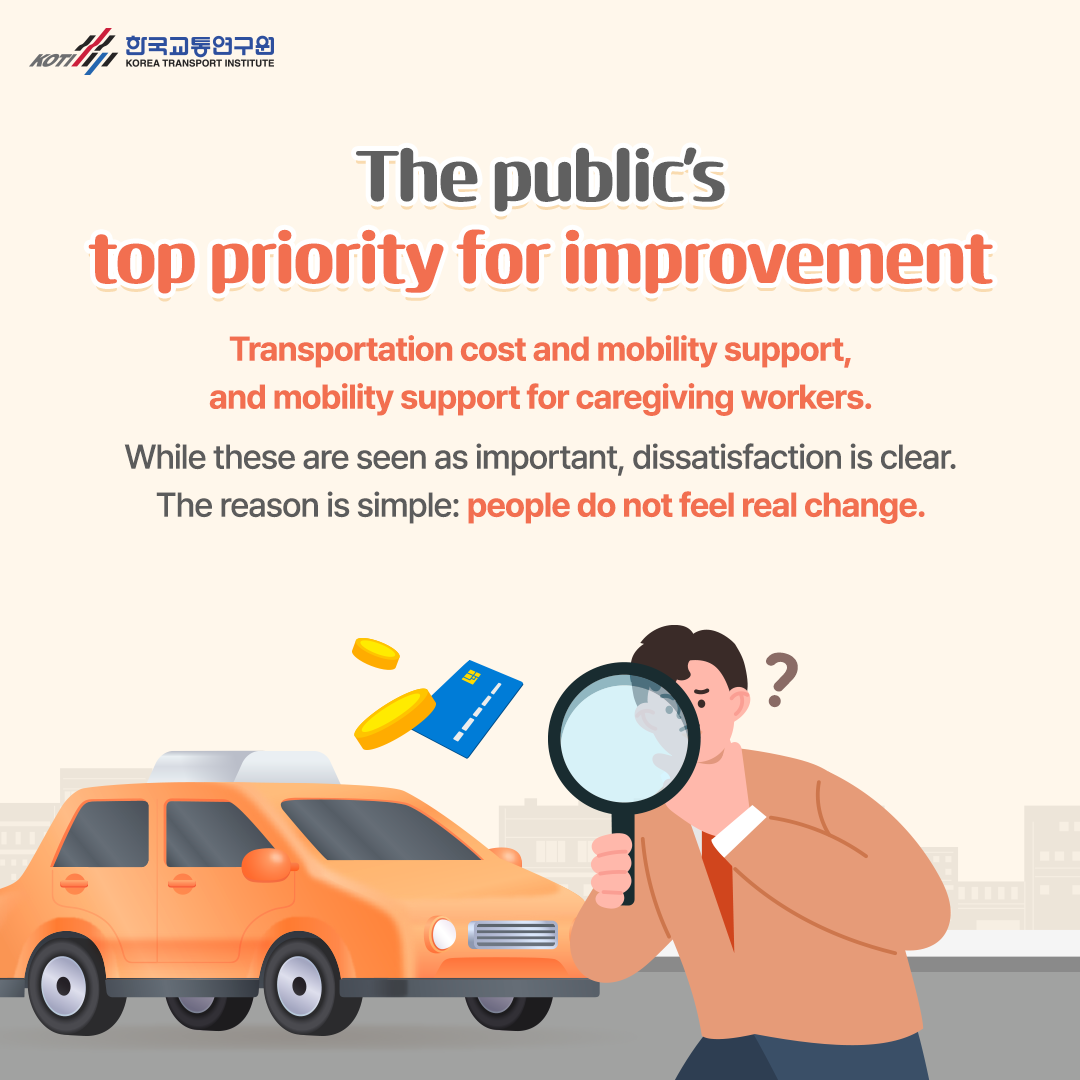
The public’s top priority for improvement
Transportation cost and mobility support, and mobility support for caregiving workers.
While these are seen as important, dissatisfaction is clear.
The reason is simple: people do not feel real change.
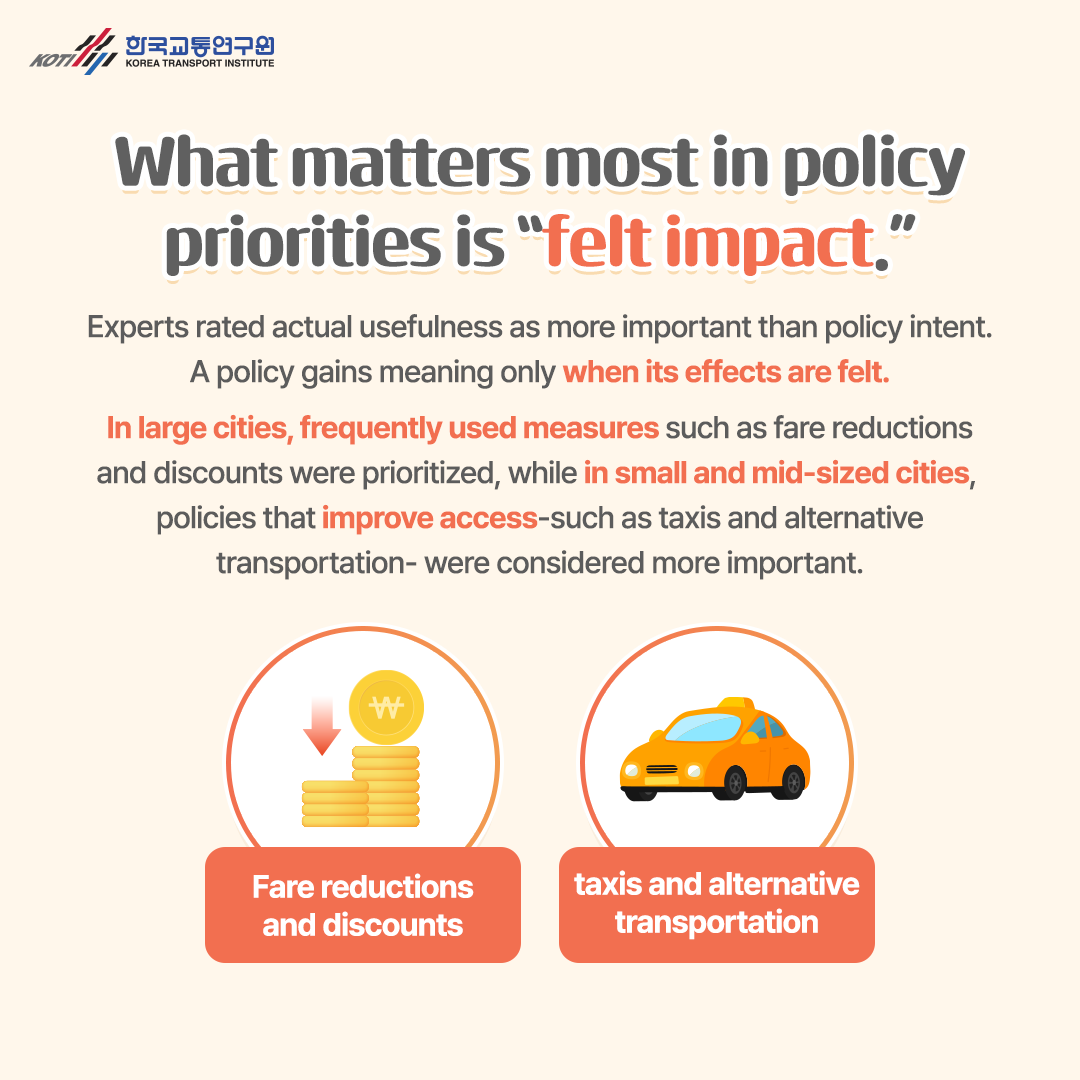
What matters most in policy priorities is “felt impact.”
Experts rated actual usefulness as more important than policy intent.
A policy gains meaning only when its effects are felt.
In large cities, frequently used measures such as fare reductions and discounts were prioritized, while in small and mid-sized cities, policies that improve access—such as taxis and alternative transportation—were considered more important.
(Fare reductions and discounts, taxis and alternative transportation)
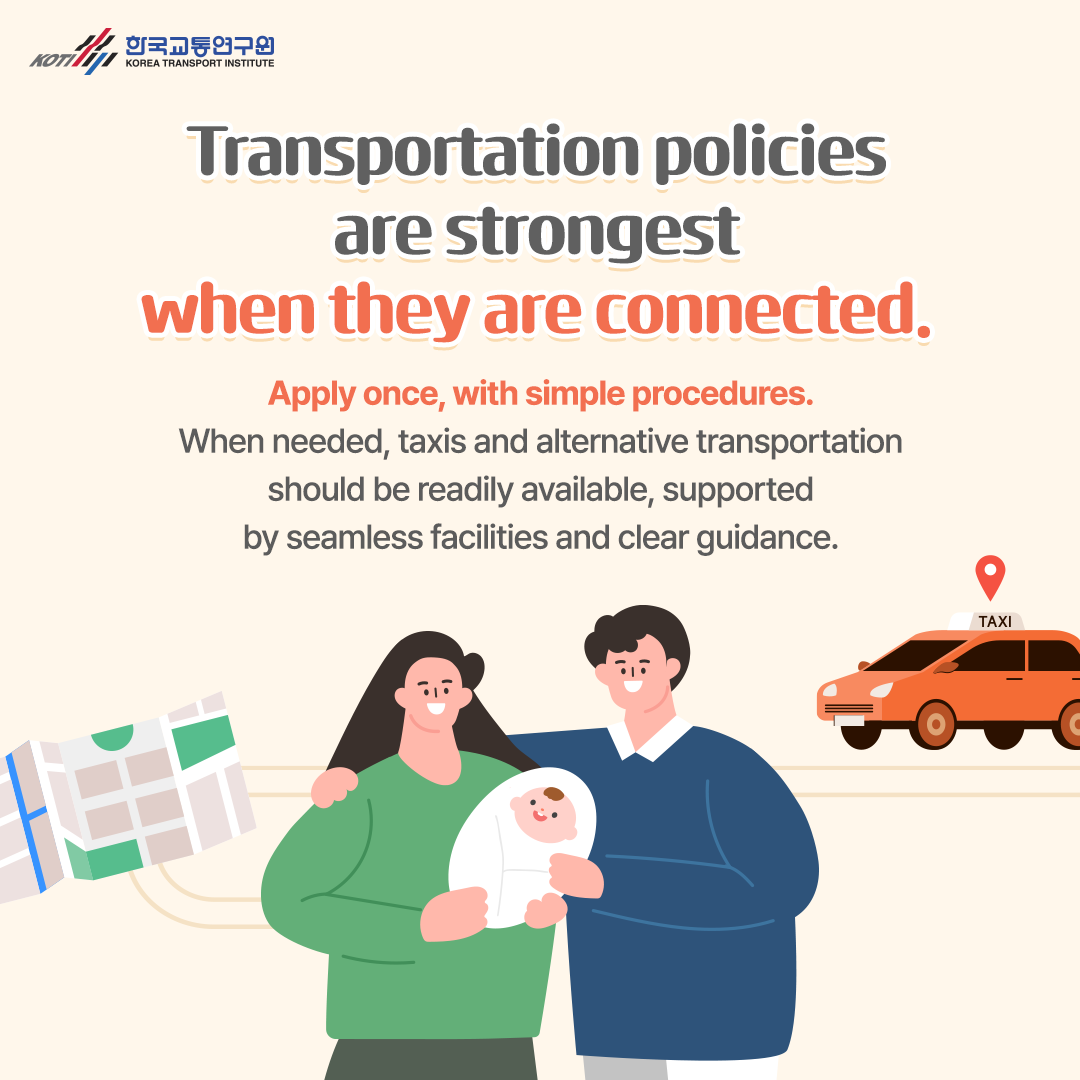
Transportation policies are strongest when they are connected.
Apply once, with simple procedures.
When needed, taxis and alternative transportation should be readily available, supported by seamless facilities and clear guidance.
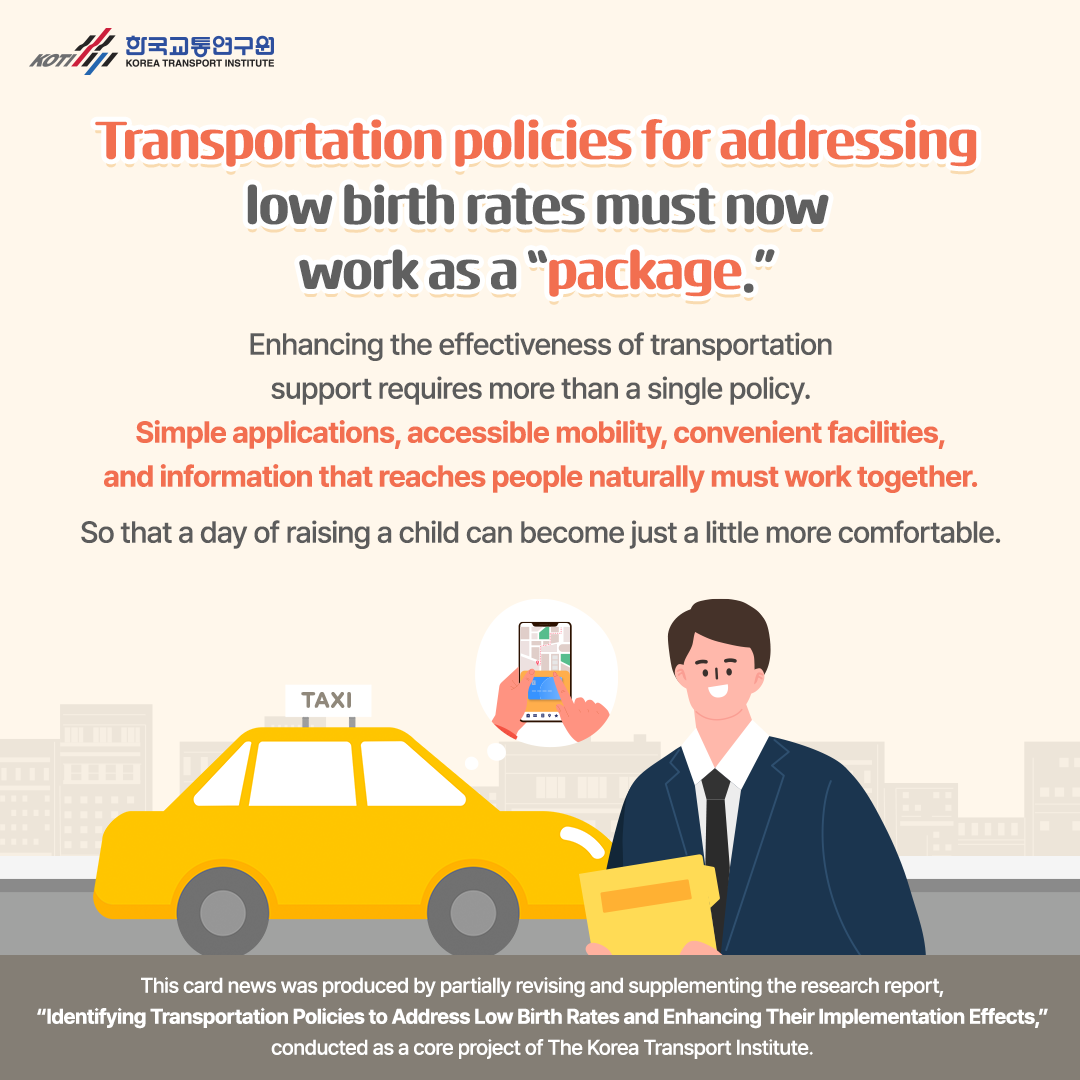
Transportation policies for addressing low birth rates must now work as a “package.”
Enhancing the effectiveness of transportation support requires more than a single policy.
Simple applications, accessible mobility, convenient facilities, and information that reaches people naturally must work together.
So that a day of raising a child can become just a little more comfortable.
* This card news was produced by partially revising and supplementing the research report, “Identifying Transportation Policies to Address Low Birth Rates and Enhancing Their Implementation Effects,” conducted as a core project of The Korea Transport Institute.