Card News

NEWS
KOTI - Korea Transport institute
Feeds and Updates
At Alley Intersections, Do You Still Stop and Look Both Ways Before Crossing?
July 15 2026
-
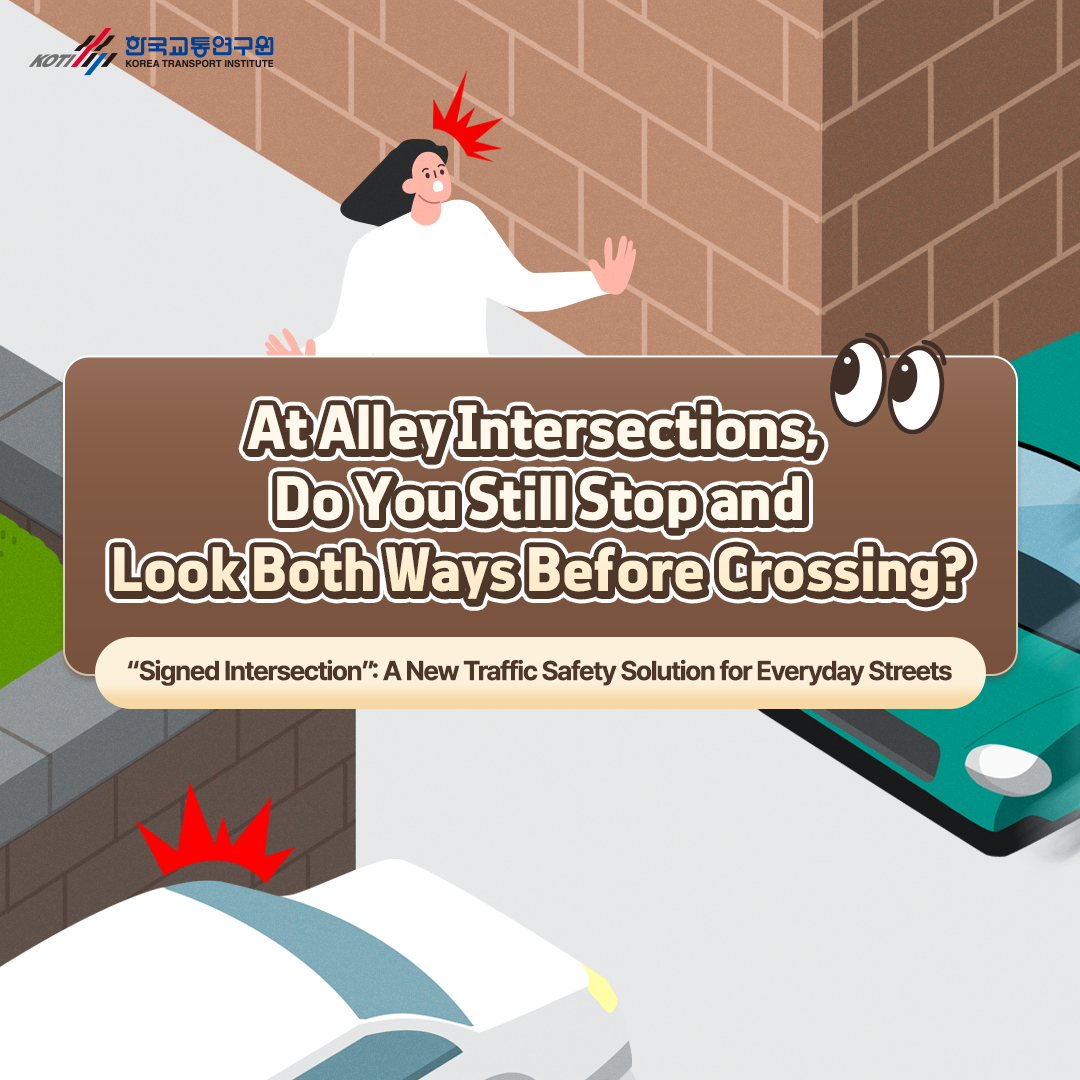
At Alley Intersections, Do You Still Stop and Look Both Ways Before Crossing?
- “Signed Intersection”: A New Traffic Safety Solution for Everyday Streets -
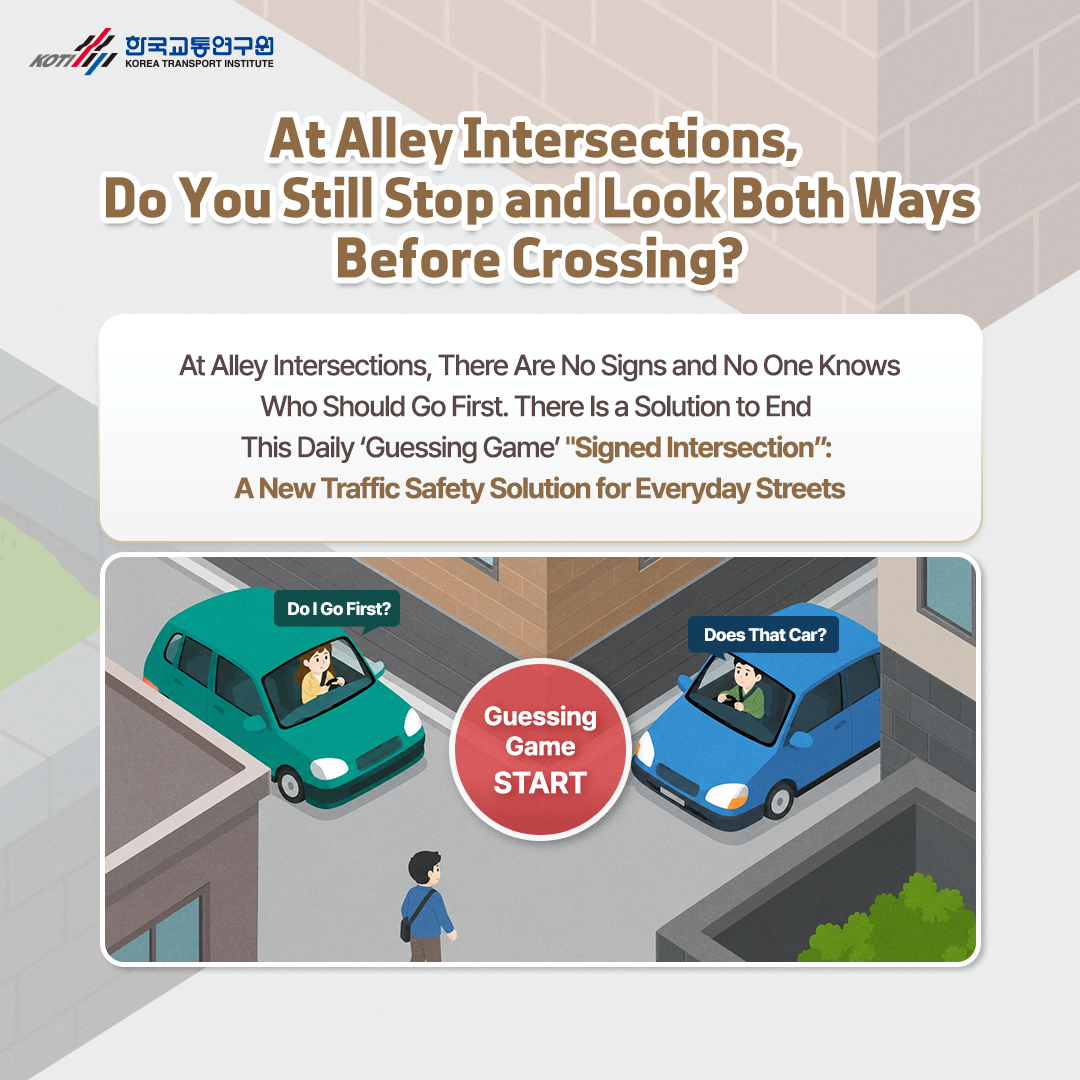
At Alley Intersections, Do You Still Stop and Look Both Ways Before Crossing?
At Alley Intersections, There Are No Signs and No One Knows Who Should Go First.
There Is a Solution to End This Daily ‘Guessing Game’
"Signed Intersection”:
A New Traffic Safety Solution for Everyday Streets
“Do I Go First, or Does That Car?”
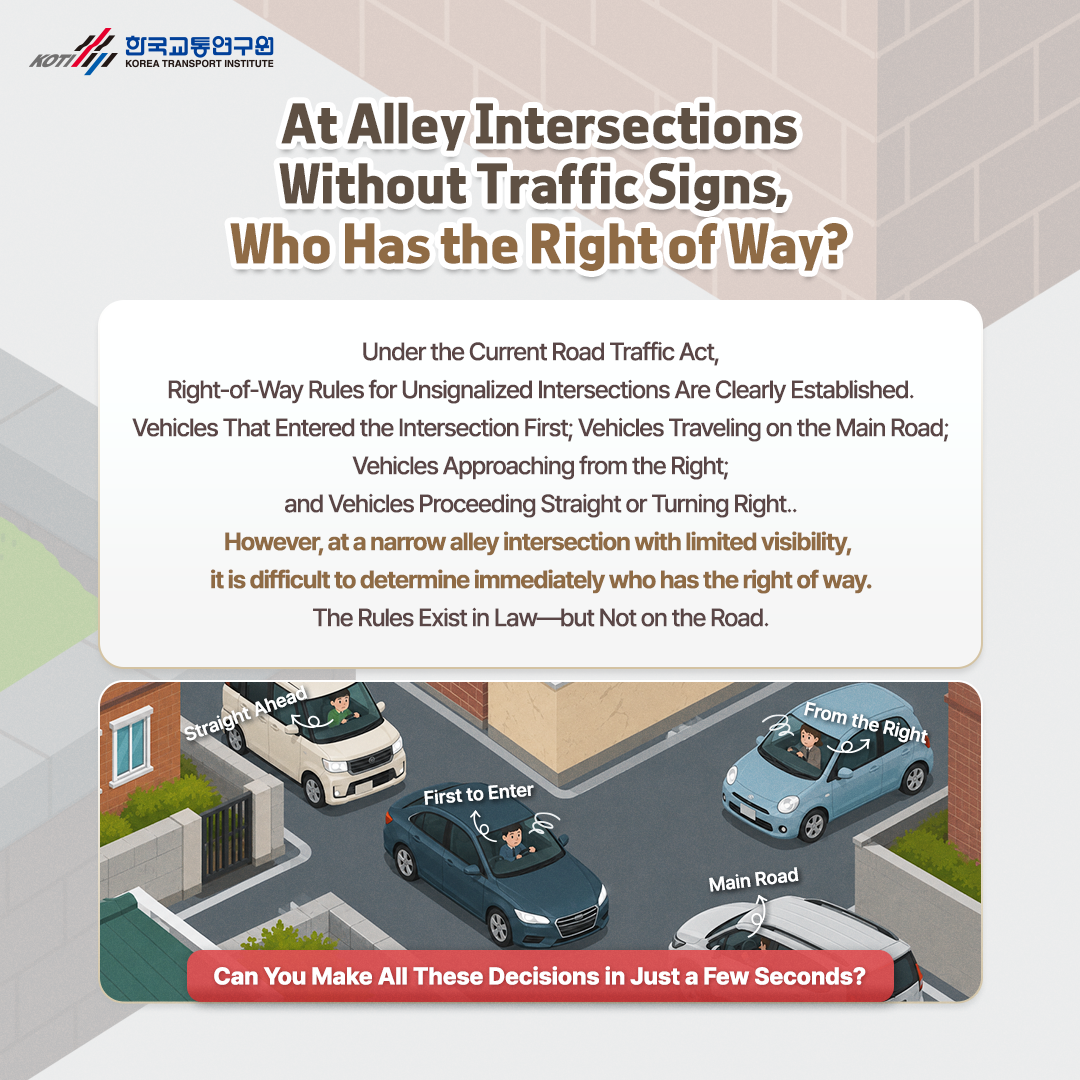
At Alley Intersections Without Traffic Signs, Who Has the Right of Way?
Under the Current Road Traffic Act, Right-of-Way Rules for Unsignalized Intersections Are Clearly Established.
Vehicles That Entered the Intersection First; Vehicles Traveling on the Main Road; Vehicles Approaching from the Right; and Vehicles Proceeding Straight or Turning Right..
However, at a narrow alley intersection with limited visibility, it is difficult to determine immediately who has the right of way.
The Rules Exist in Law—but Not on the Road.
Can You Make All These Decisions in Just a Few Seconds?
Straight Ahead, From the Right, Main Road, First to Enter
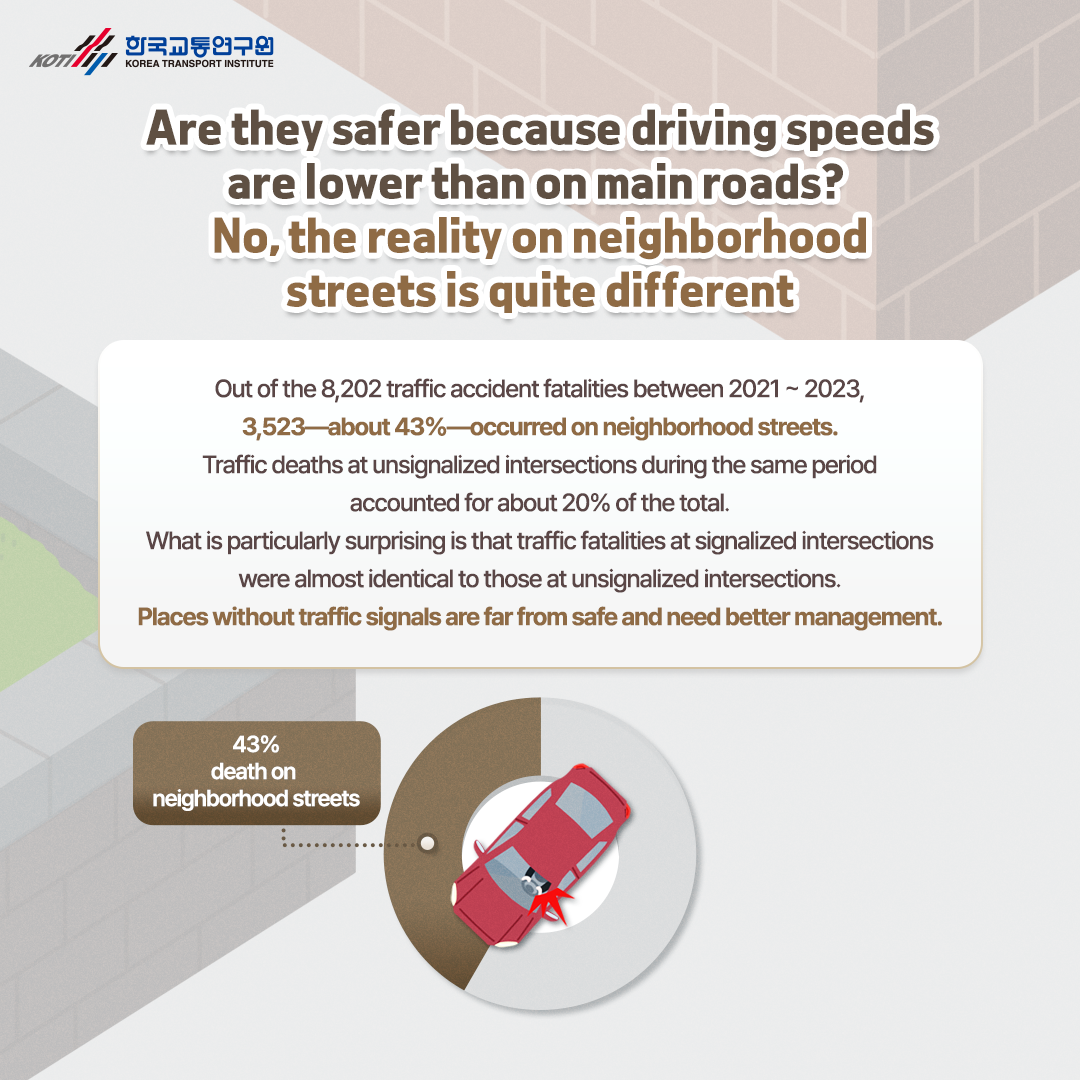
Are they safer because driving speeds are lower than on main roads?
No, the reality on neighborhood streets is quite different.
Out of the 8,202 traffic accident fatalities between 2021 and 2023, 3,523—about 40%—occurred on neighborhood streets.
Traffic deaths at unsignalized intersections during the same period accounted for about 20% of the total.
What is particularly surprising is that traffic fatalities at signalized intersections were almost identical to those at unsignalized intersections.
Places without traffic signals are far from safe and need better management.
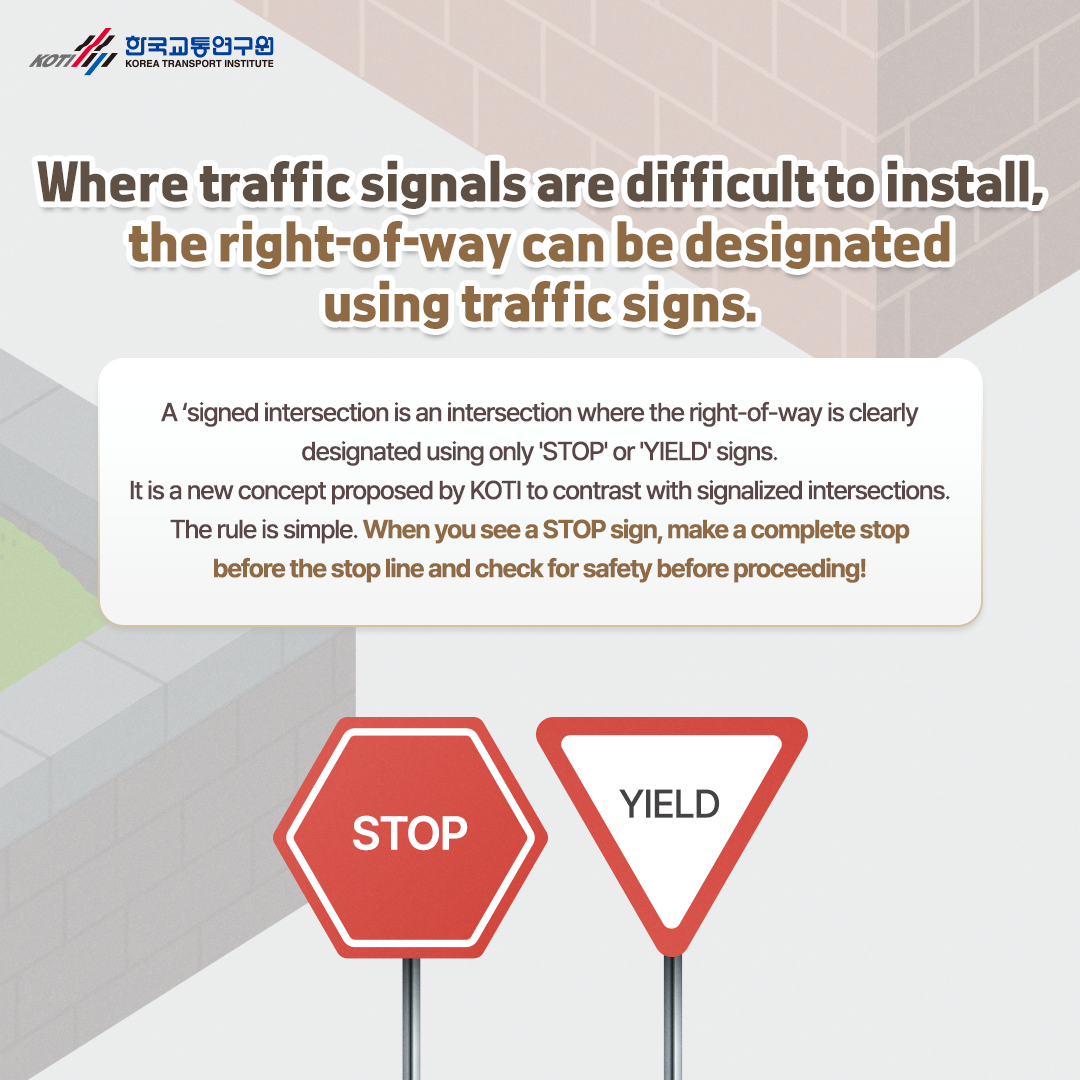
Where traffic signals are difficult to install, the right-of-way can be designated using traffic signs.
A ‘signed intersection is an intersection where the right-of-way is clearly designated using only 'STOP' or 'YIELD' signs.
It is a new concept proposed by KOTI to contrast with signalized intersections.
The rule is simple.
When you see a STOP sign, make a complete stop before the stop line and check for safety before proceeding!
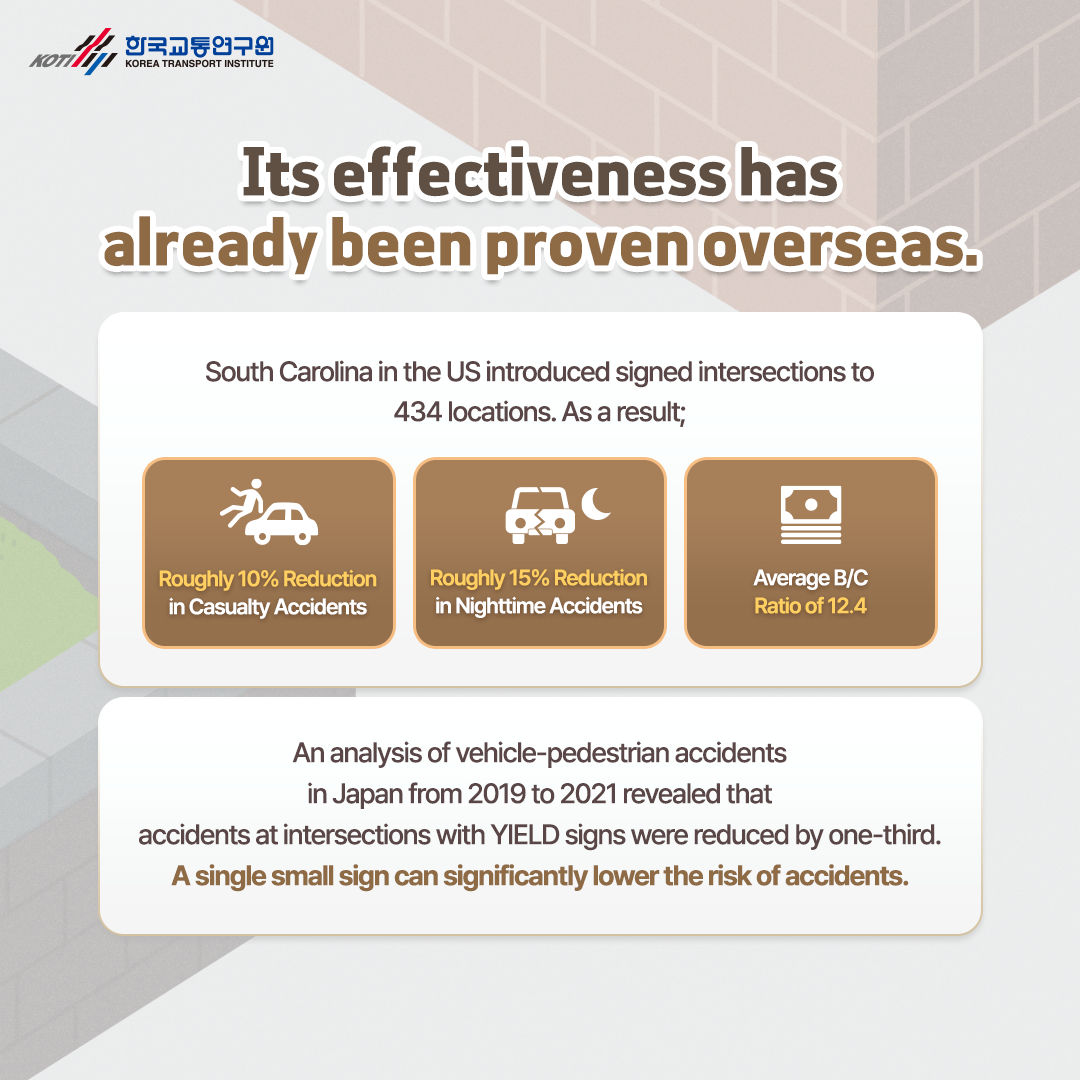
Its effectiveness has already been proven overseas.
South Carolina in the US introduced signed intersections to 434 locations.
As a result;
- Roughly 10% Reduction in Casualty Accidents
- Roughly 15% Reduction in Nighttime Accidents
- Average B/C Ratio of 12.4
An analysis of vehicle-pedestrian accidents in Japan from 2019 to 2021 revealed that accidents at intersections with YIELD signs were reduced by one-third.
A single small sign can significantly lower the risk of accidents.
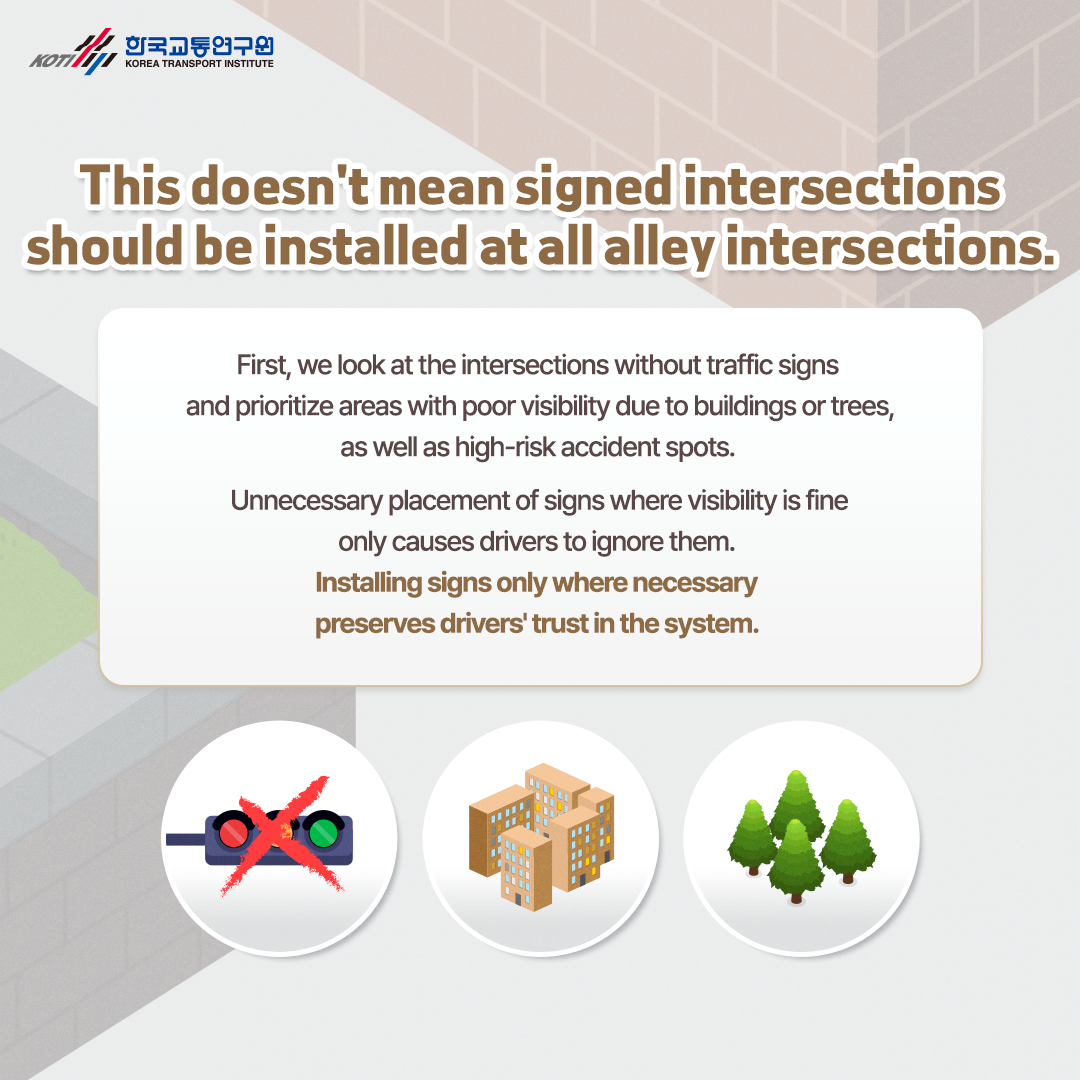
This doesn't mean signed intersections should be installed at all alley intersections.
First, we look at the intersections without traffic signs and prioritize areas with poor visibility due to buildings or trees, as well as high-risk accident spots.
Unnecessary placement of signs where visibility is fine only causes drivers to ignore them.
Installing signs only where necessary preserves drivers' trust in the system.
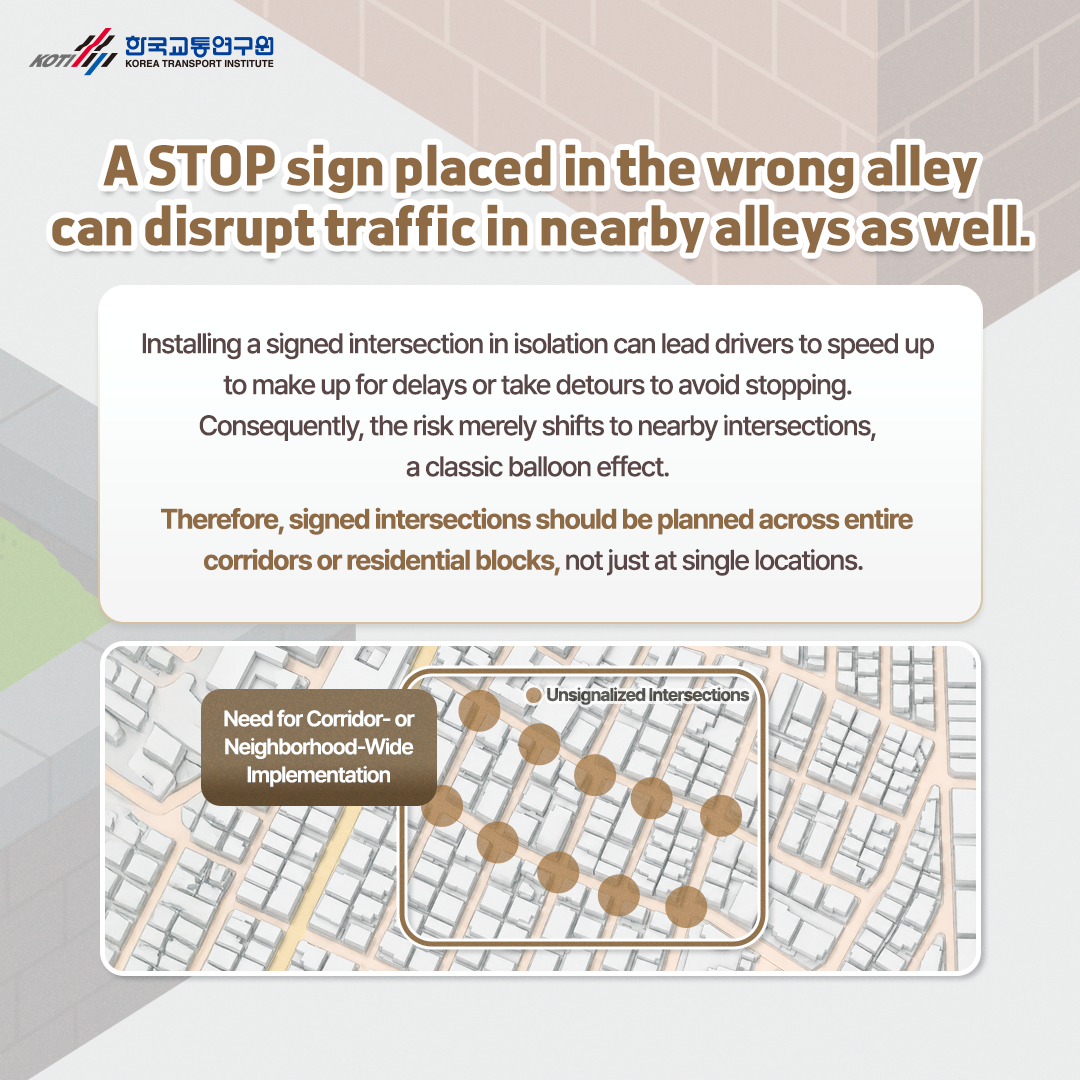
A STOP sign placed in the wrong alley can disrupt traffic in nearby alleys as well.
Installing a signed intersection in isolation can lead drivers to speed up to make up for delays or take detours to avoid stopping.
Consequently, the risk merely shifts to nearby intersections, a classic balloon effect.
Therefore, signed intersections should be planned across entire corridors or residential blocks, not just at single locations. (Refer to page vii in the report) Unsignalized Intersections Need for Corridor- or Neighborhood-Wide Implementation
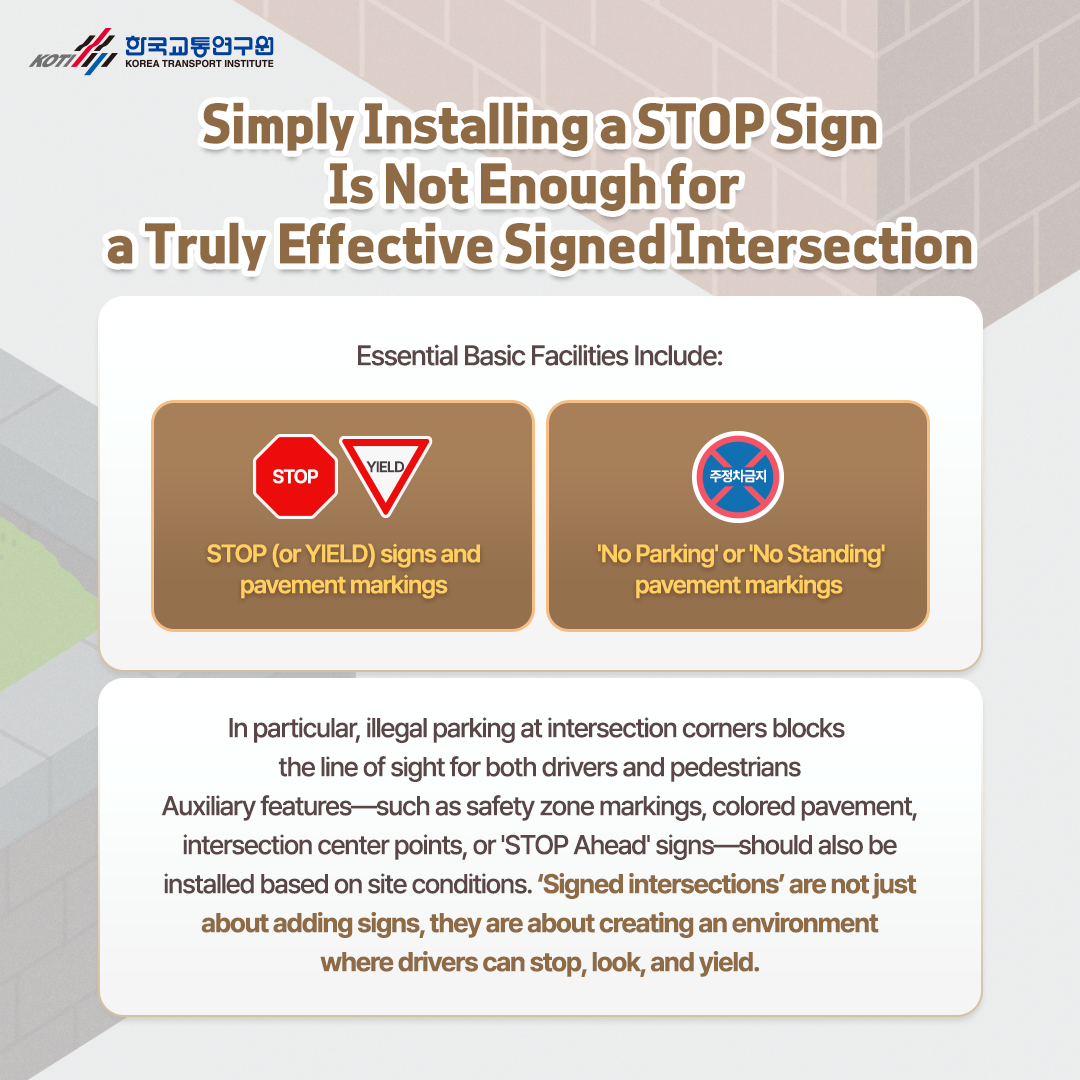
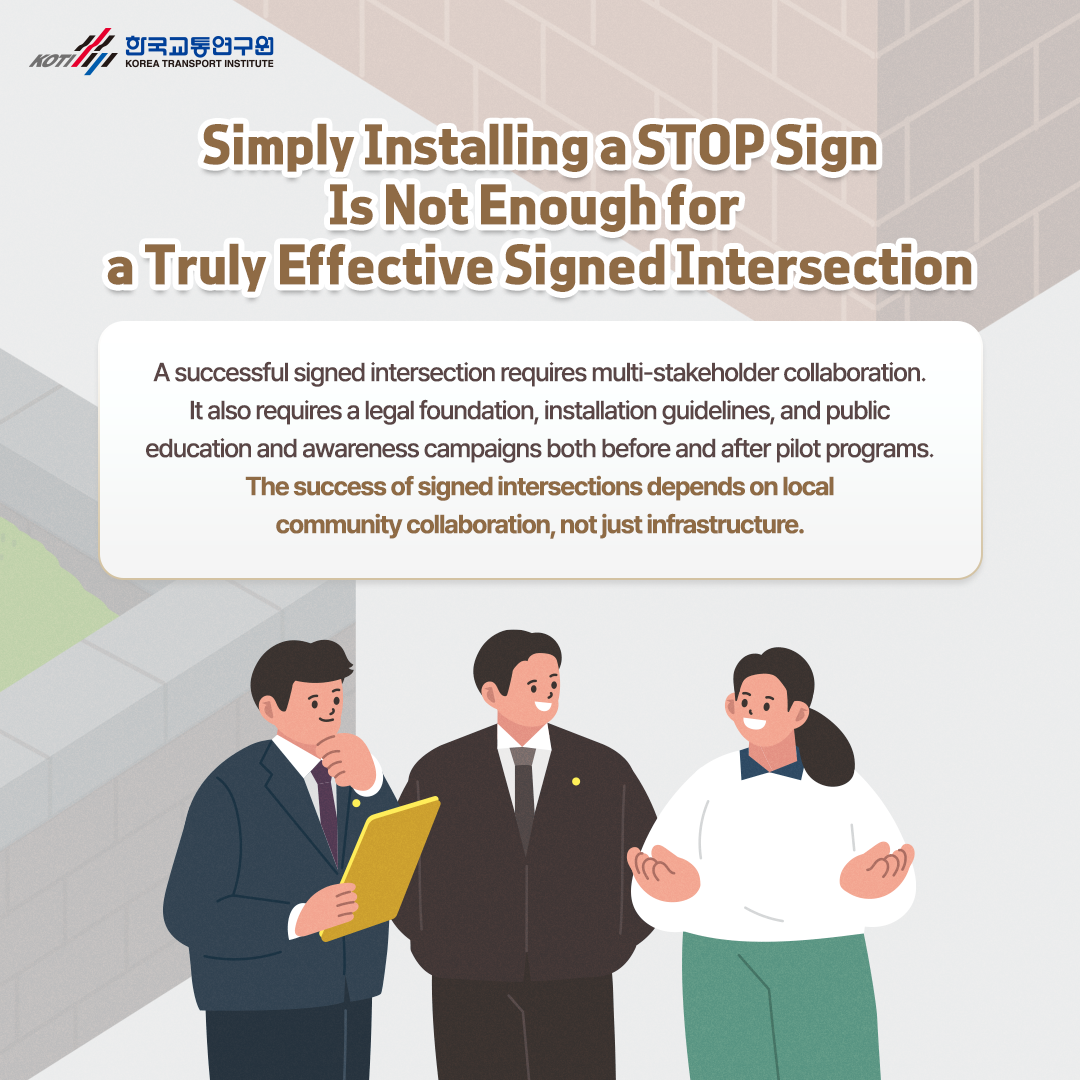
Simply Installing a STOP Sign Is Not Enough for a Truly Effective Signed Intersection
Essential Basic Facilities Include:
- STOP (or YIELD) signs and pavement markings
- 'No Parking' or 'No Standing' pavement markings
In particular, illegal parking at intersection corners blocks the line of sight for both drivers and pedestrians Auxiliary features—such as safety zone markings, colored pavement, intersection center points, or 'STOP Ahead' signs—should also be installed based on site conditions.
'Signed intersections' are not just about adding signs, they are about creating an environment where drivers can stop, look, and yield.
Gaining public consensus is far more difficult than painting lines on the road.
A successful signed intersection requires multi-stakeholder collaboration.
It also requires a legal foundation, installation guidelines, and public education and awareness campaigns both before and after pilot programs.
The success of signed intersections depends on local community collaboration, not just infrastructure.
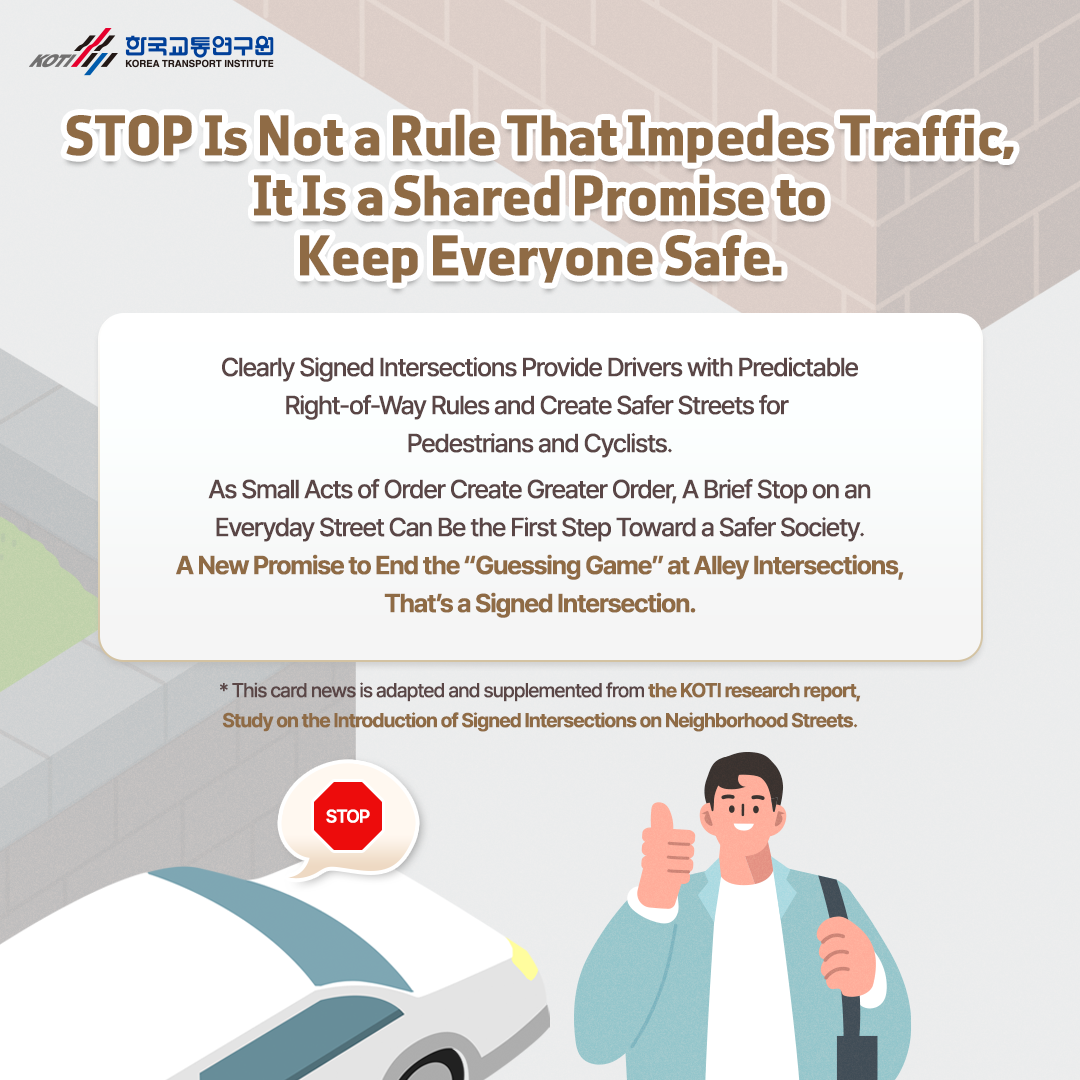
STOP Is Not a Rule That Impedes Traffic, It Is a Shared Promise to Keep Everyone Safe.
Clearly Signed Intersections Provide Drivers with Predictable Right-of-Way Rules and Create Safer Streets for Pedestrians and Cyclists.
As Small Acts of Order Create Greater Order, A Brief Stop on an Everyday Street Can Be the First Step Toward a Safer Society.
A New Promise to End the “Guessing Game” at Alley Intersections, That’s a Signed Intersection.
* This card news is adapted and supplemented from the KOTI research report, Study on the Introduction of Signed Intersections on Neighborhood Streets.