Card News

NEWS
KOTI - Korea Transport institute
Feeds and Updates
Looking Ahead: How Will the Way We Move Change?
August 20 2026
-
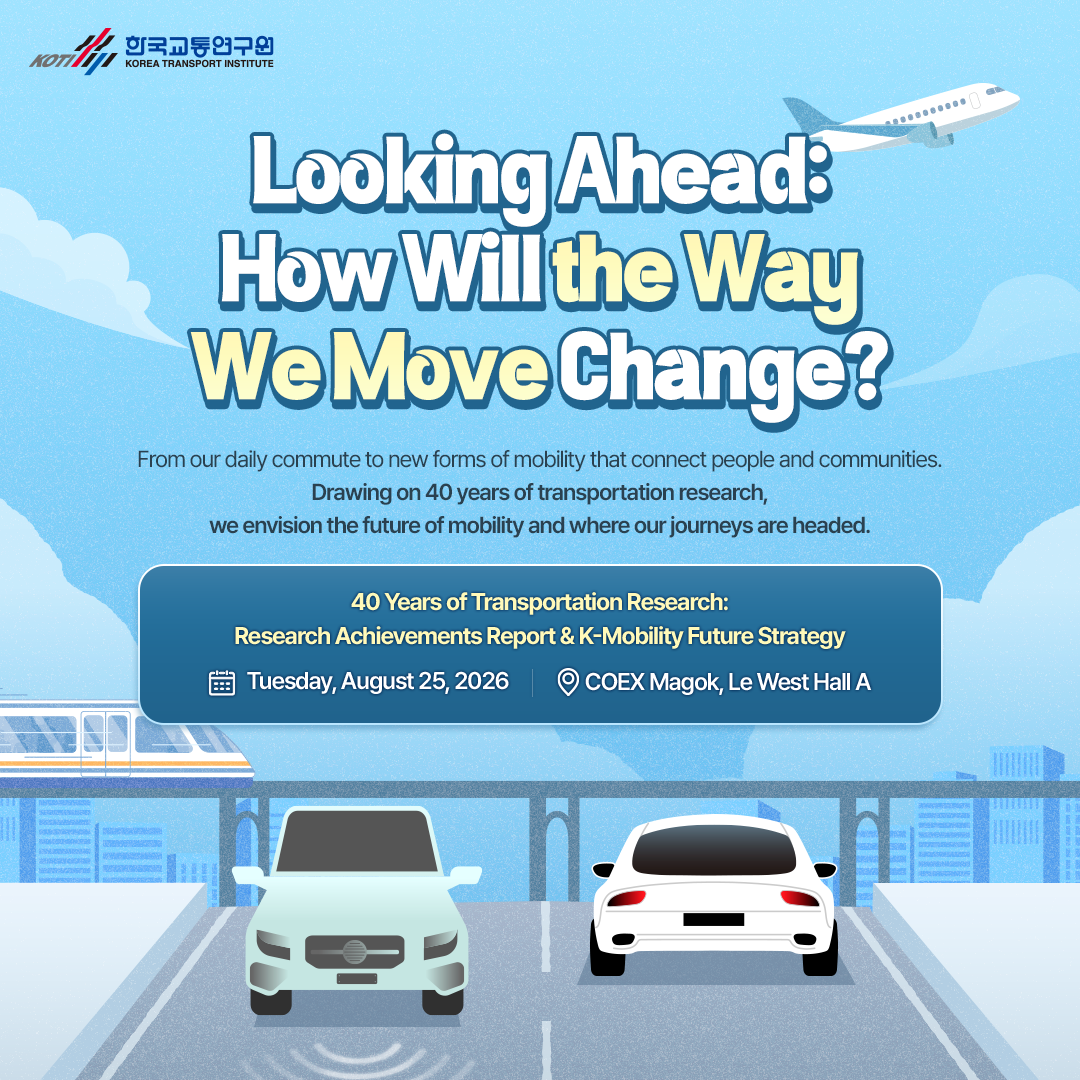
Looking Ahead: How Will the Way We Move Change?
From our daily commute to new forms of mobility that connect people and communities. Drawing on 40 years of transportation research, we envision the future of mobility and where our journeys are headed.
40 Years of Transportation Research: Research Achievements Report & K-Mobility Future Strategy Tuesday, August 25, 2026 | COEX Magok, Le West Hall A
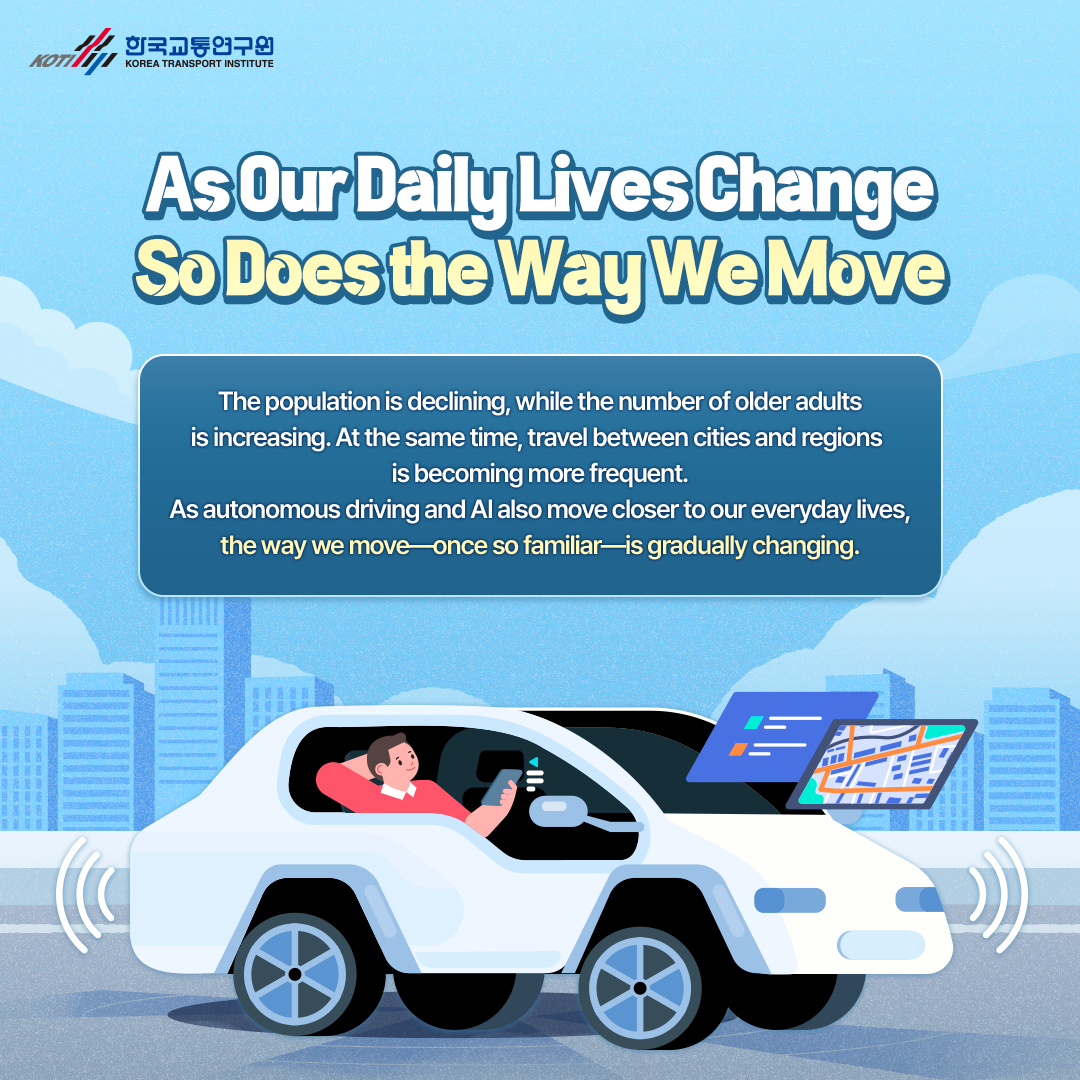
As Our Daily Lives Change So Does the Way We Move
The population is declining, while the number of older adults is increasing.
At the same time, travel between cities and regions is becoming more frequent.
As autonomous driving and AI also move closer to our everyday lives, the way we move—once so familiar—is gradually changing.
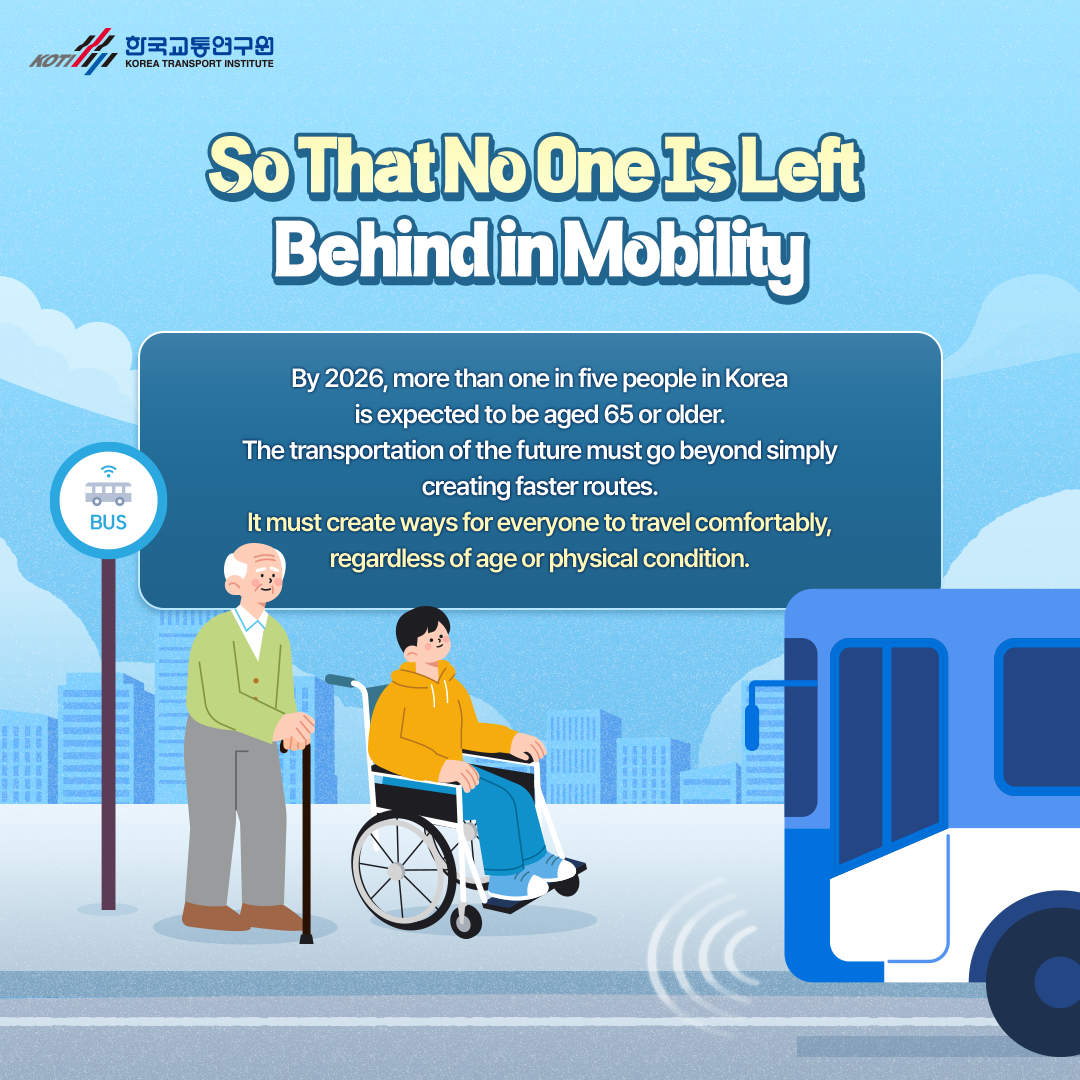
So That No One Is Left Behind in Mobility
By 2026, more than one in five people in Korea is expected to be aged 65 or older.
The transportation of the future must go beyond simply creating faster routes.
It must create ways for everyone to travel comfortably, regardless of age or physical condition.
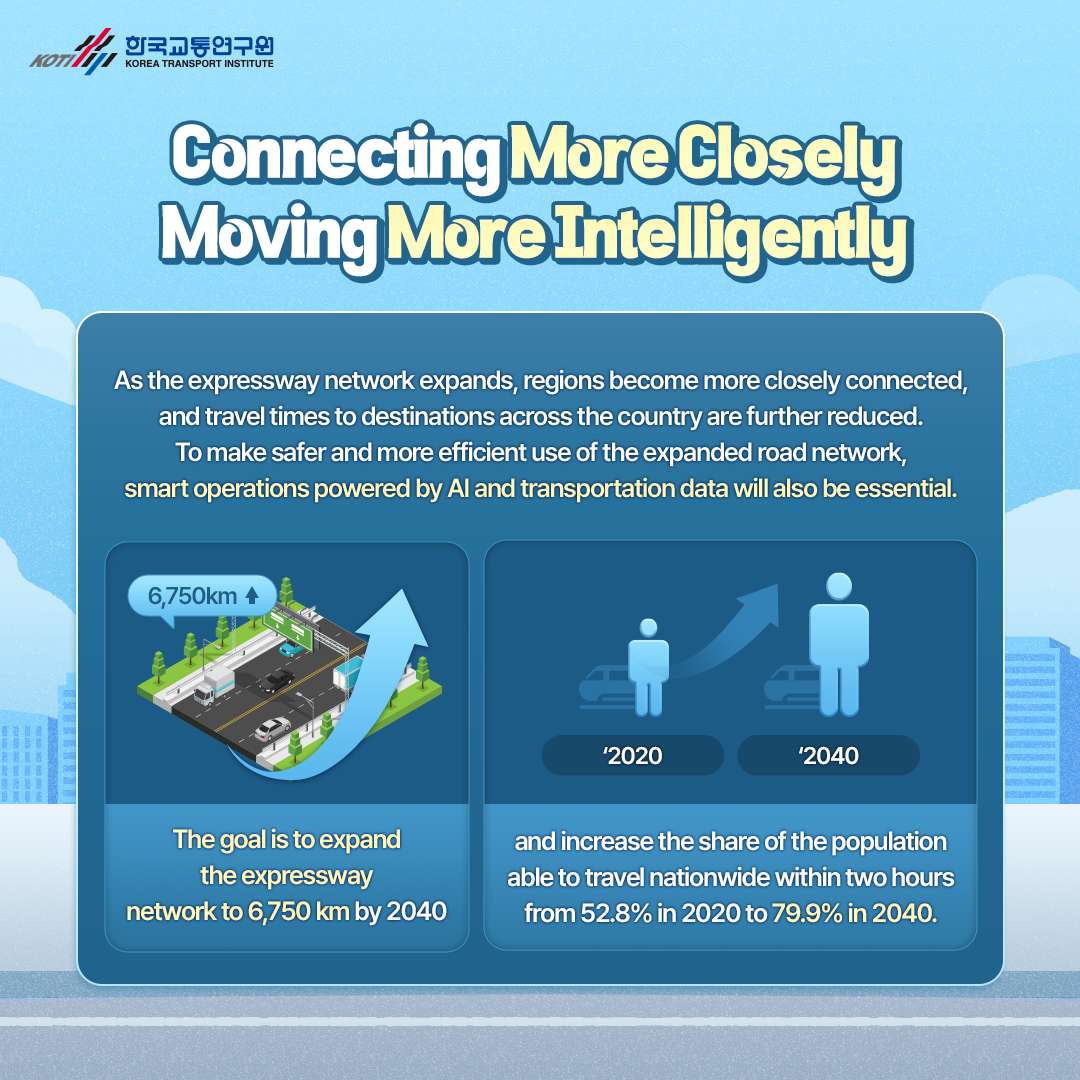
Connecting More Closely Moving More Intelligently
As the expressway network expands, regions become more closely connected, and travel times to destinations across the country are further reduced.
To make safer and more efficient use of the expanded road network, smart operations powered by AI and transportation data will also be essential.
The goal is to expand the expressway network to 6,750 km by 2040 and increase the share of the population able to travel nationwide within two hours from 52.8% in 2020 to 79.9% in 2040.
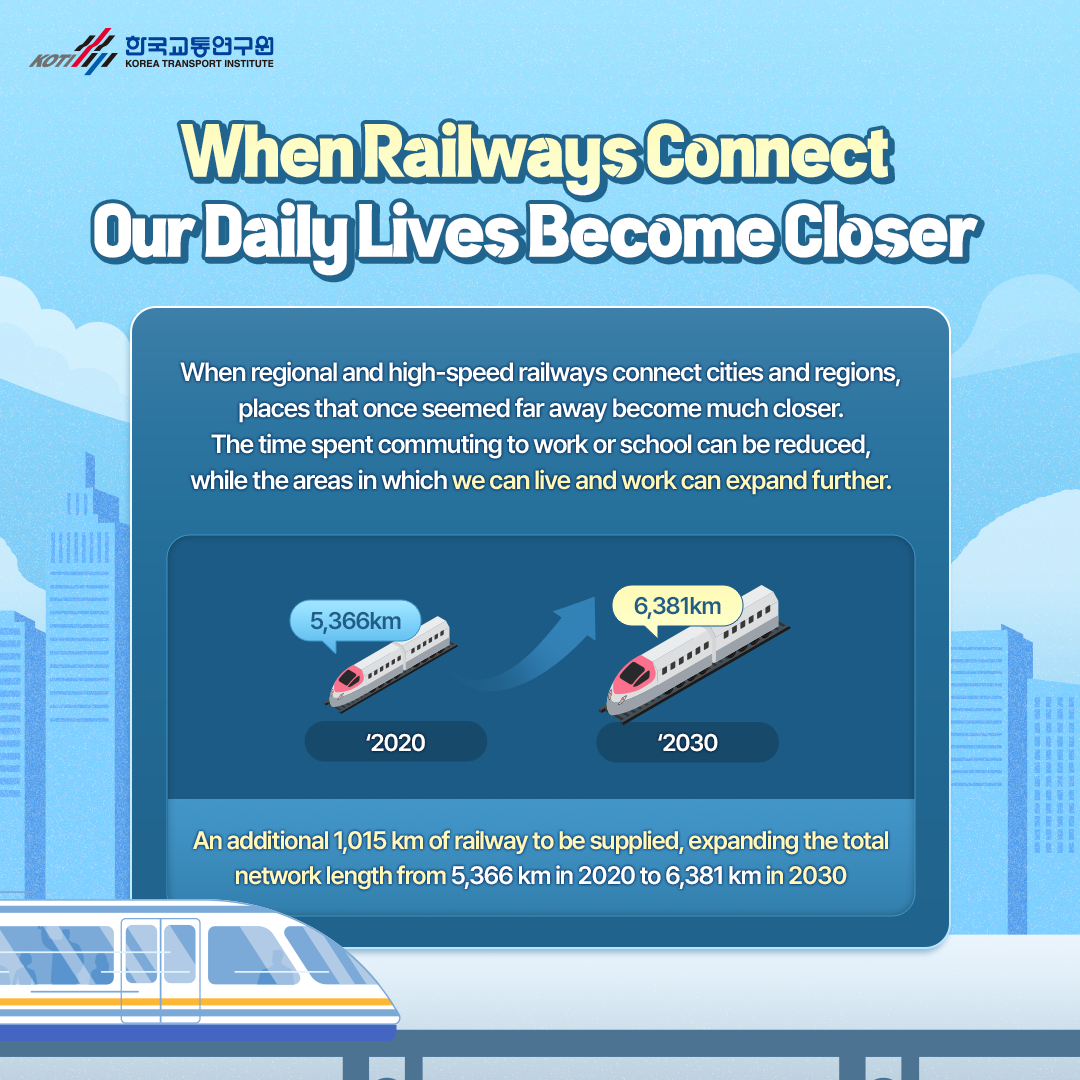
When Railways Connect Our Daily Lives Become Closer
When regional and high-speed railways connect cities and regions, places that once seemed far away become much closer.
The time spent commuting to work or school can be reduced, while the areas in which we can live and work can expand further.
An additional 1,015 km of railway to be supplied, expanding the total network length from 5,366 km in 2020 to 6,381 km in 2030
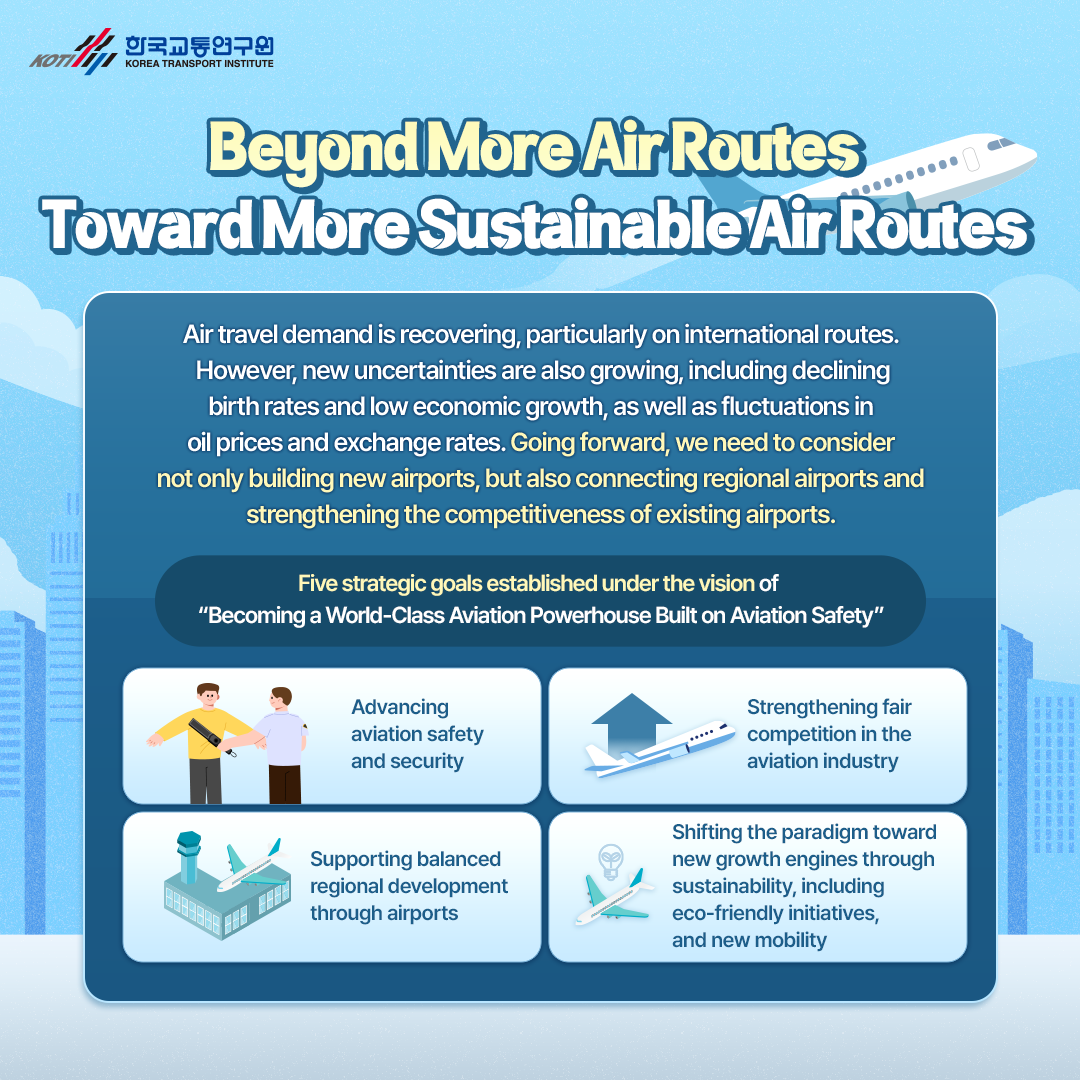
Beyond More Air Routes Toward More Sustainable Air Routes
Air travel demand is recovering, particularly on international routes. However, new uncertainties are also growing, including declining birth rates and low economic growth, as well as fluctuations in oil prices and exchange rates.
Going forward, we need to consider not only building new airports, but also connecting regional airports and strengthening the competitiveness of existing airports.
Five strategic goals established under the vision of “Becoming a World-Class Aviation Powerhouse Built on Aviation Safety” Advancing aviation safety and security Strengthening fair competition in the aviation industry Supporting balanced regional development through airports Shifting the paradigm toward new growth engines through sustainability, including eco-friendly initiatives, and new mobility
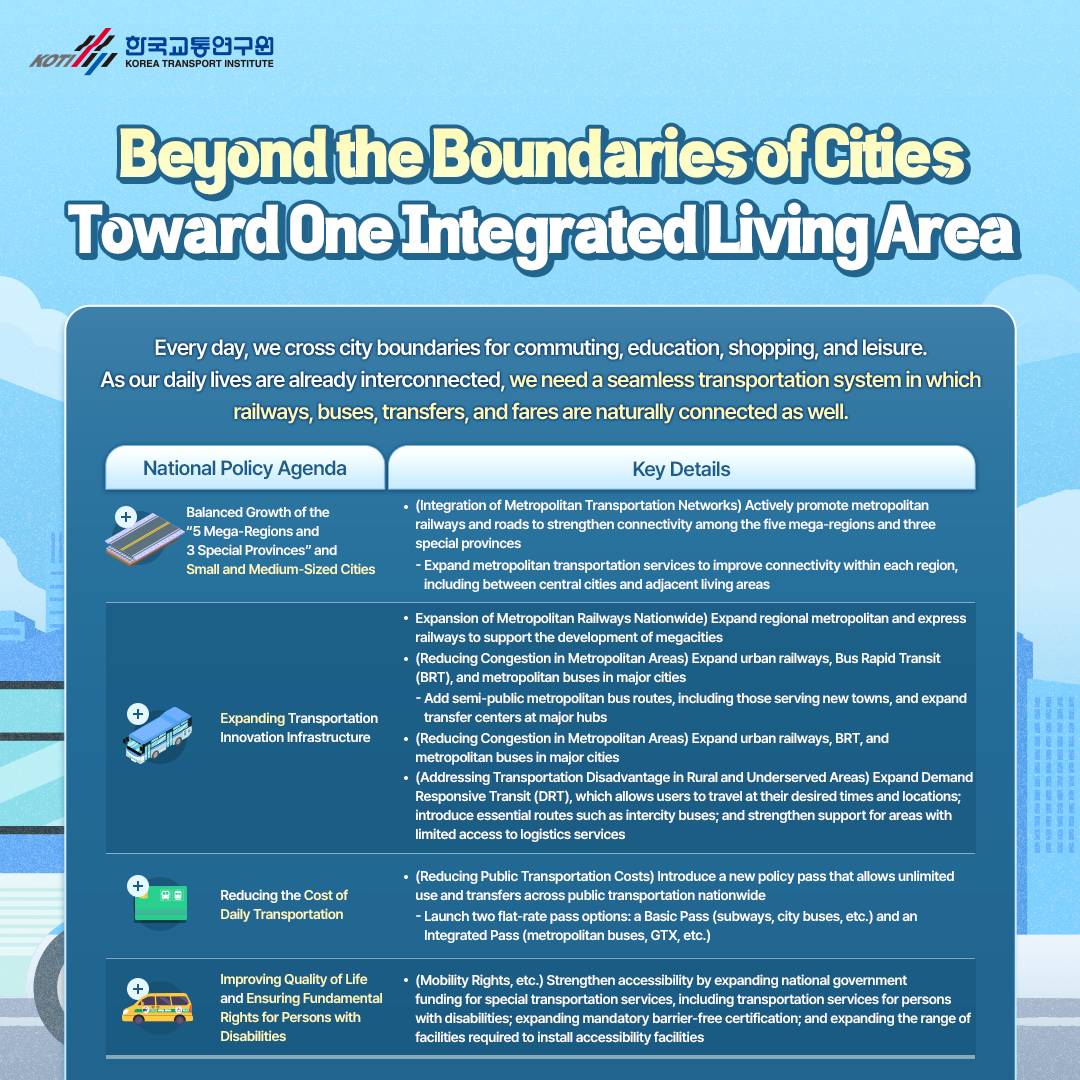
Beyond the Boundaries of Cities Toward One Integrated Living Area
Every day, we cross city boundaries for commuting, education, shopping, and leisure.
As our daily lives are already interconnected, we need a seamless transportation system in which railways, buses, transfers, and fares are naturally connected as well.
Balanced Growth of the “5 Mega-Regions and 3 Special Provinces” and Small and Medium-Sized Cities
· (Integration of Metropolitan Transportation Networks) Actively promote metropolitan railways and roads to strengthen connectivity among the five mega-regions and three special provinces
- Expand metropolitan transportation services to improve connectivity within each region, including between central cities and adjacent living areas
Expanding Transportation Innovation Infrastructure
· Expansion of Metropolitan Railways Nationwide) Expand regional metropolitan and express railways to support the development of megacities
· (Reducing Congestion in Metropolitan Areas) Expand urban railways, Bus Rapid Transit (BRT), and metropolitan buses in major cities
· Add semi-public metropolitan bus routes, including those serving new towns, and expand transfer centers at major hubs
· (Reducing Congestion in Metropolitan Areas) Expand urban railways, BRT, and metropolitan buses in major cities
· (Addressing Transportation Disadvantage in Rural and Underserved Areas) Expand Demand Responsive Transit (DRT), which allows users to travel at their desired times and locations; introduce essential routes such as intercity buses; and strengthen support for areas with limited access to logistics services
Reducing the Cost of Daily Transportation
· (Reducing Public Transportation Costs) Introduce a new policy pass that allows unlimited use and transfers across public transportation nationwide
- Launch two flat-rate pass options: a Basic Pass (subways, city buses, etc.) and an Integrated Pass (metropolitan buses, GTX, etc.)
Improving Quality of Life and Ensuring Fundamental Rights for Persons with Disabilities
· (Mobility Rights, etc.) Strengthen accessibility by expanding national government funding for special transportation services, including transportation services for persons with disabilities; expanding mandatory barrier-free certification; and expanding the range of facilities required to install accessibility facilities
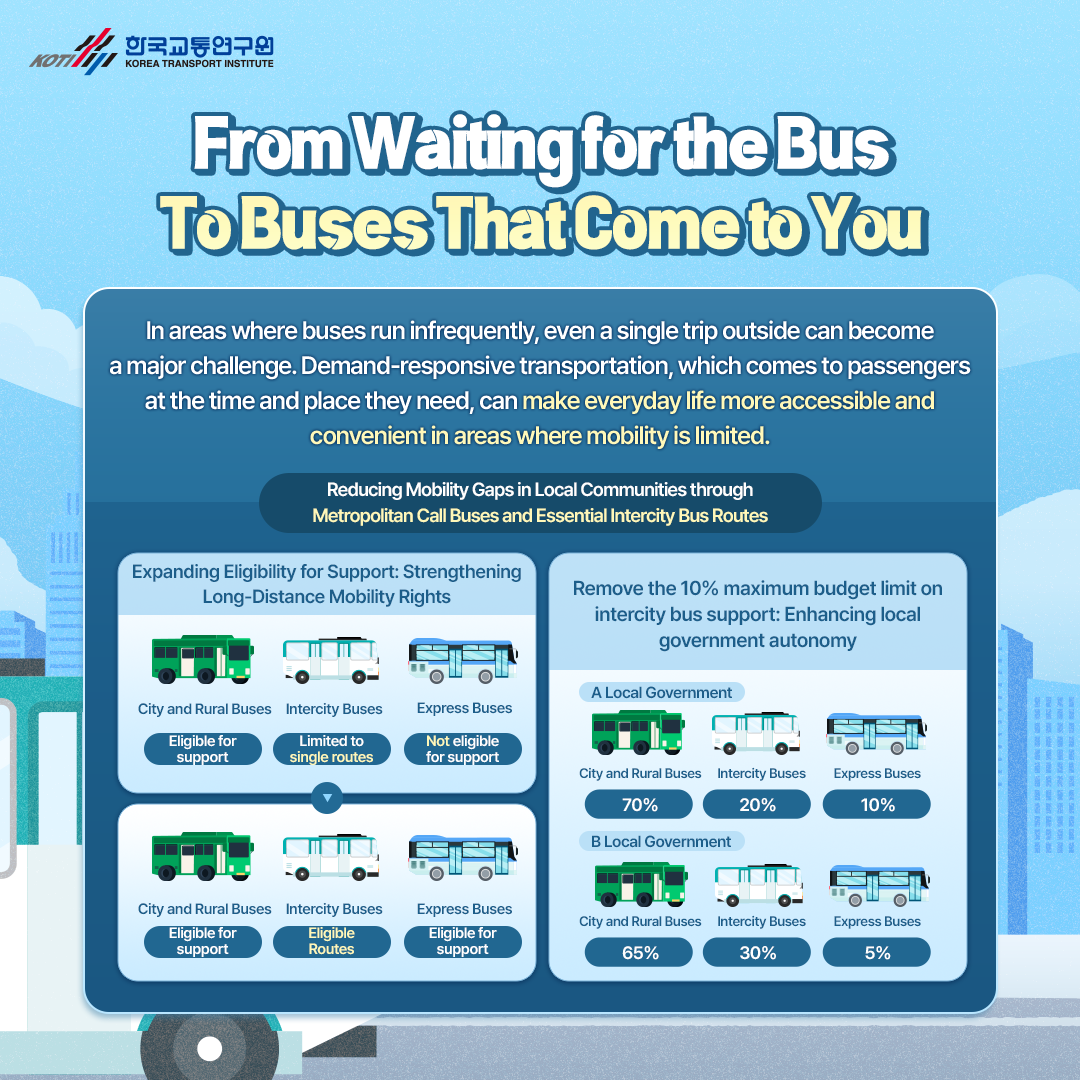
From Waiting for the Bus To Buses That Come to You
In areas where buses run infrequently, even a single trip outside can become a major challenge.
Demand-responsive transportation, which comes to passengers at the time and place they need, can make everyday life more accessible and convenient in areas where mobility is limited.
Reducing Mobility Gaps in Local Communities through Metropolitan Call Buses and Essential Intercity Bus Routes
Expanding Eligibility for Support: Strengthening Long-Distance Mobility Rights
City and Rural Buses — Eligible for support
Intercity Buses — Limited to single routes
Express Buses — Not eligible for support
Eligible Routes
Remove the 10% maximum budget limit on intercity bus support: Enhancing local government autonomy
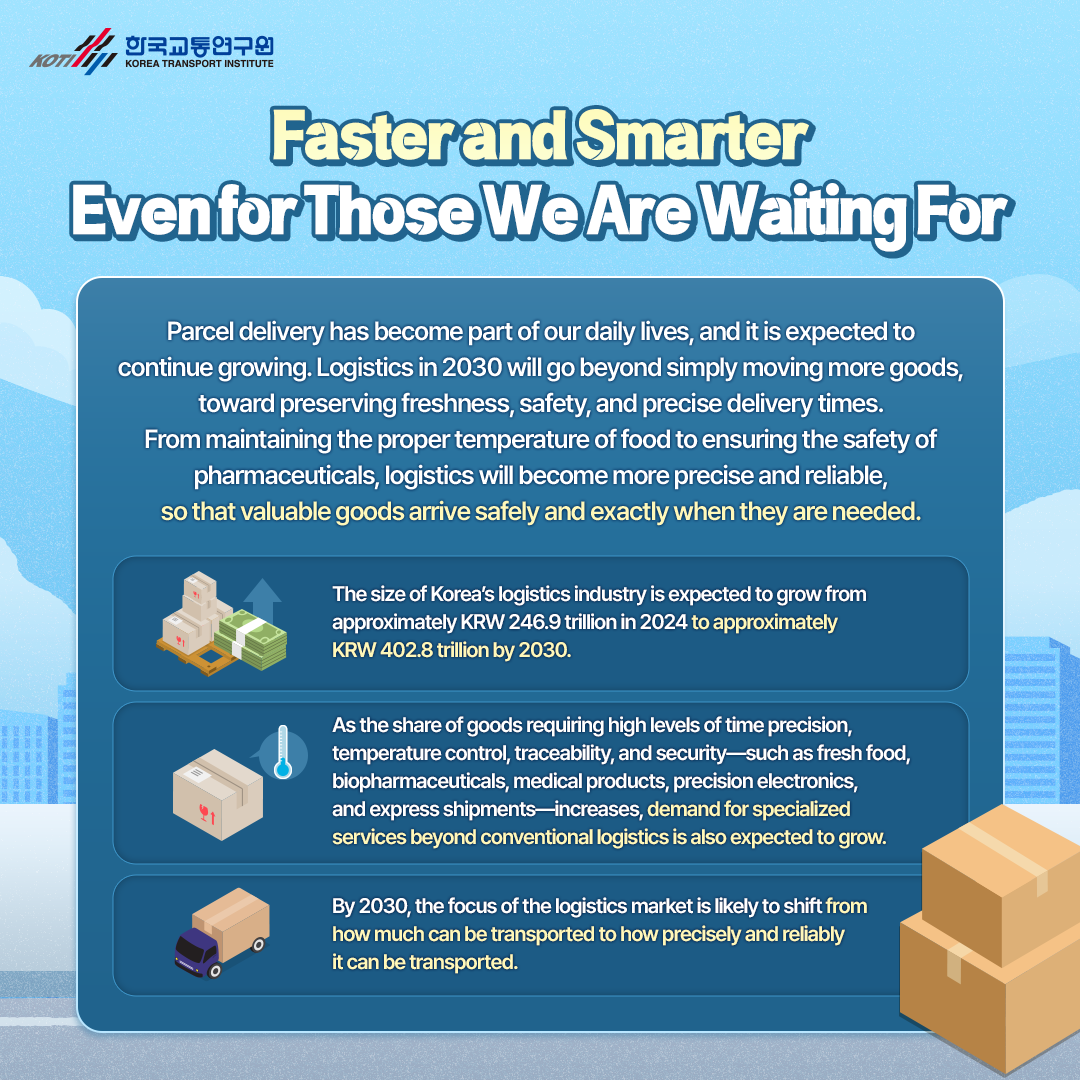
Faster and Smarter Even for Those We Are Waiting For Parcel Delivery Has Become Part of Our Daily Lives
And It Is Expected to Continue Growing Logistics in 2030 Will Go Beyond Moving More Goods Toward Preserving Freshness, Safety, and Precise Delivery Times
From maintaining the proper temperature of food to ensuring the safety of pharmaceuticals, logistics will become more precise and reliable, so that valuable goods arrive safely and exactly when they are needed.
- The size of Korea’s logistics industry is expected to grow from approximately KRW 246.9 trillion in 2024 to approximately KRW 402.8 trillion by 2030.
- As the share of goods requiring high levels of time precision, temperature control, traceability, and security—such as fresh food, biopharmaceuticals, medical products, precision electronics, and express shipments—increases, demand for specialized services beyond conventional logistics is also expected to grow.
- By 2030, the focus of the logistics market is likely to shift from how much can be transported to how precisely and reliably it can be transported.
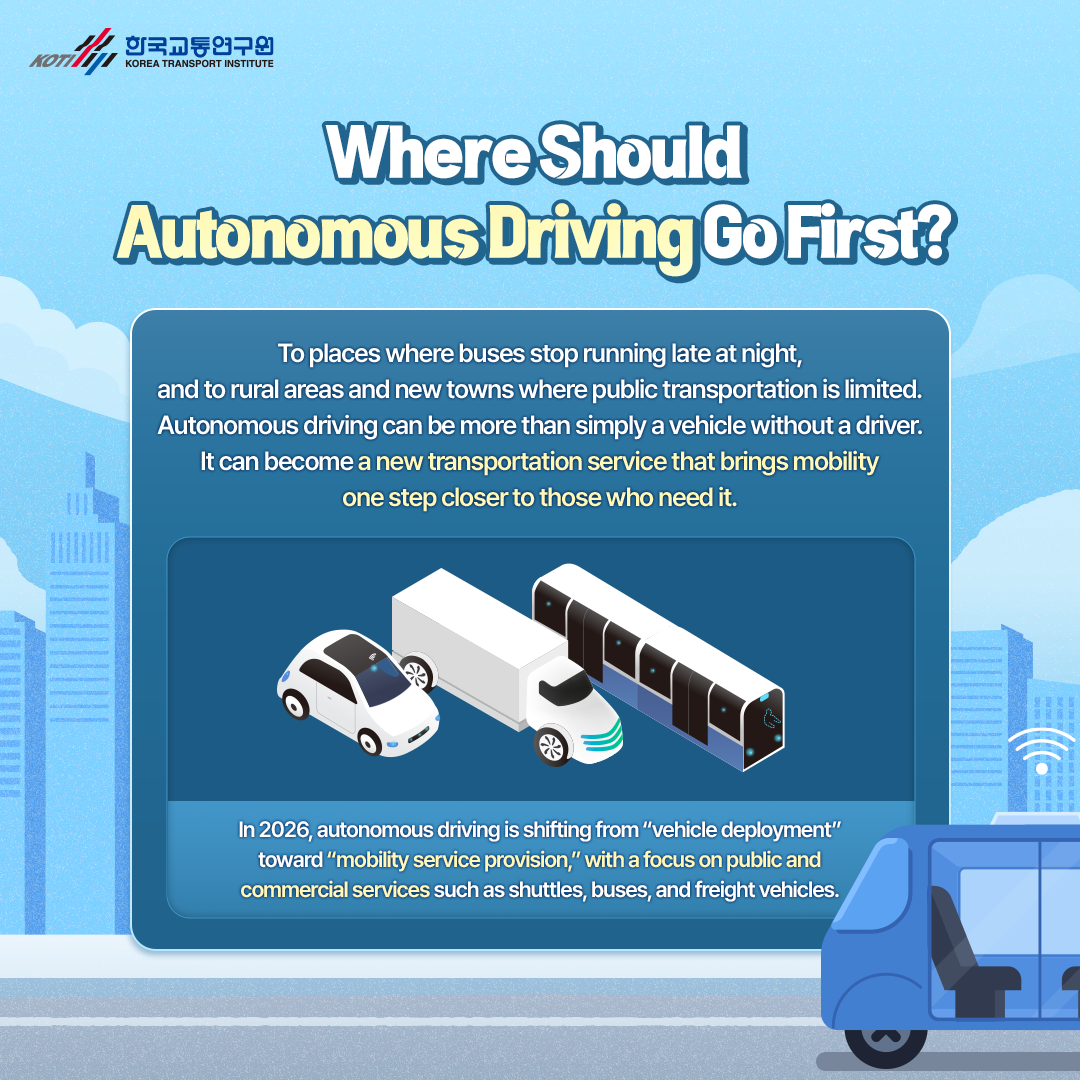
Where Should Autonomous Driving Go First?
To places where buses stop running late at night, and to rural areas and new towns where public transportation is limited.
Autonomous driving can be more than simply a vehicle without a driver.
It can become a new transportation service that brings mobility one step closer to those who need it. (To be represented visually)
In 2026, autonomous driving is shifting from “vehicle deployment” toward “mobility service provision,” with a focus on public and commercial services such as shuttles, buses, and freight vehicles.
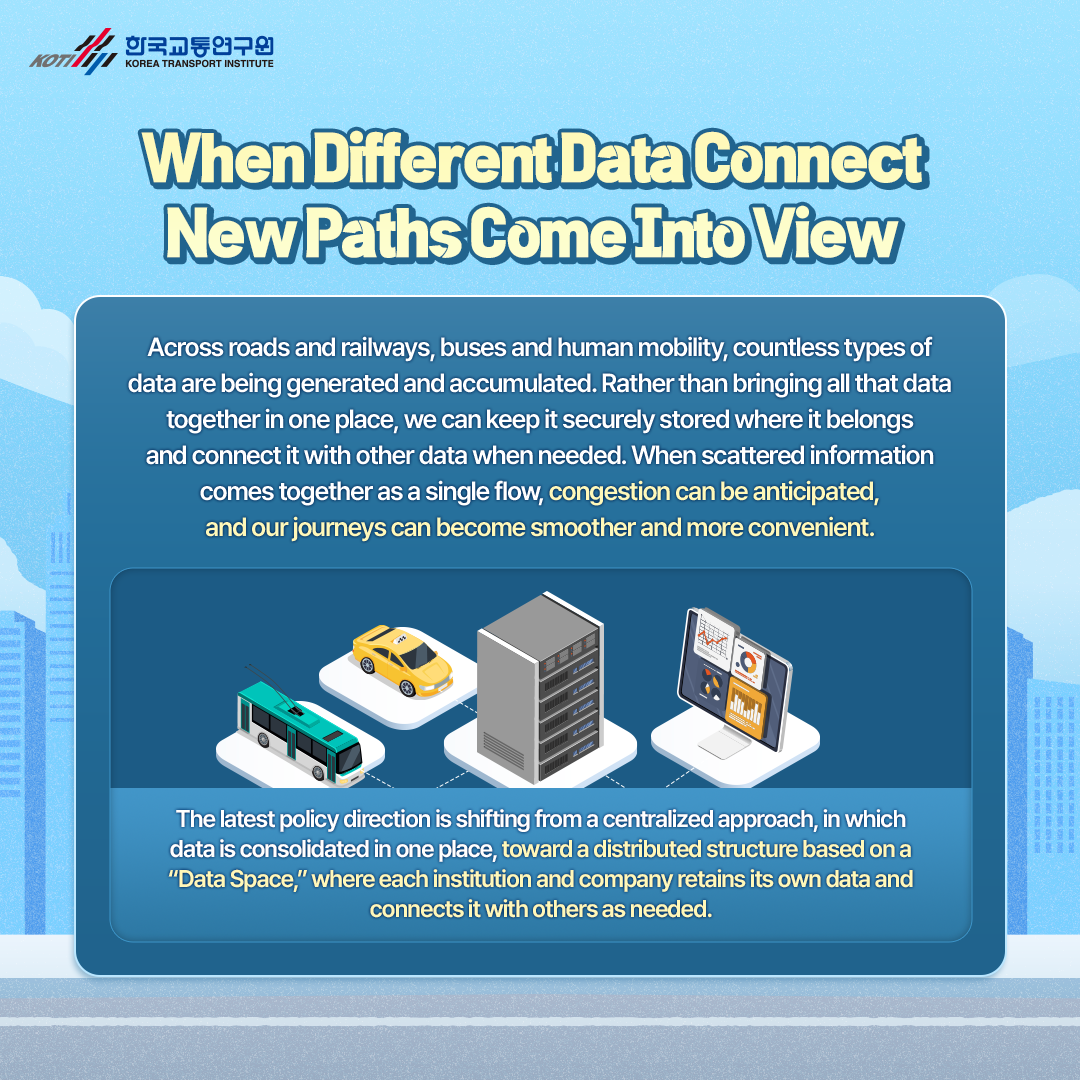
When Different Data Connect New Paths Come Into View
Across roads and railways, buses and human mobility, countless types of data are being generated and accumulated.
Rather than bringing all that data together in one place, we can keep it securely stored where it belongs and connect it with other data when needed.
When scattered information comes together as a single flow, congestion can be anticipated, and our journeys can become smoother and more convenient.
The latest policy direction is shifting from a centralized approach, in which data is consolidated in one place, toward a distributed structure based on a “Data Space,” where each institution and company retains its own data and connects it with others as needed.
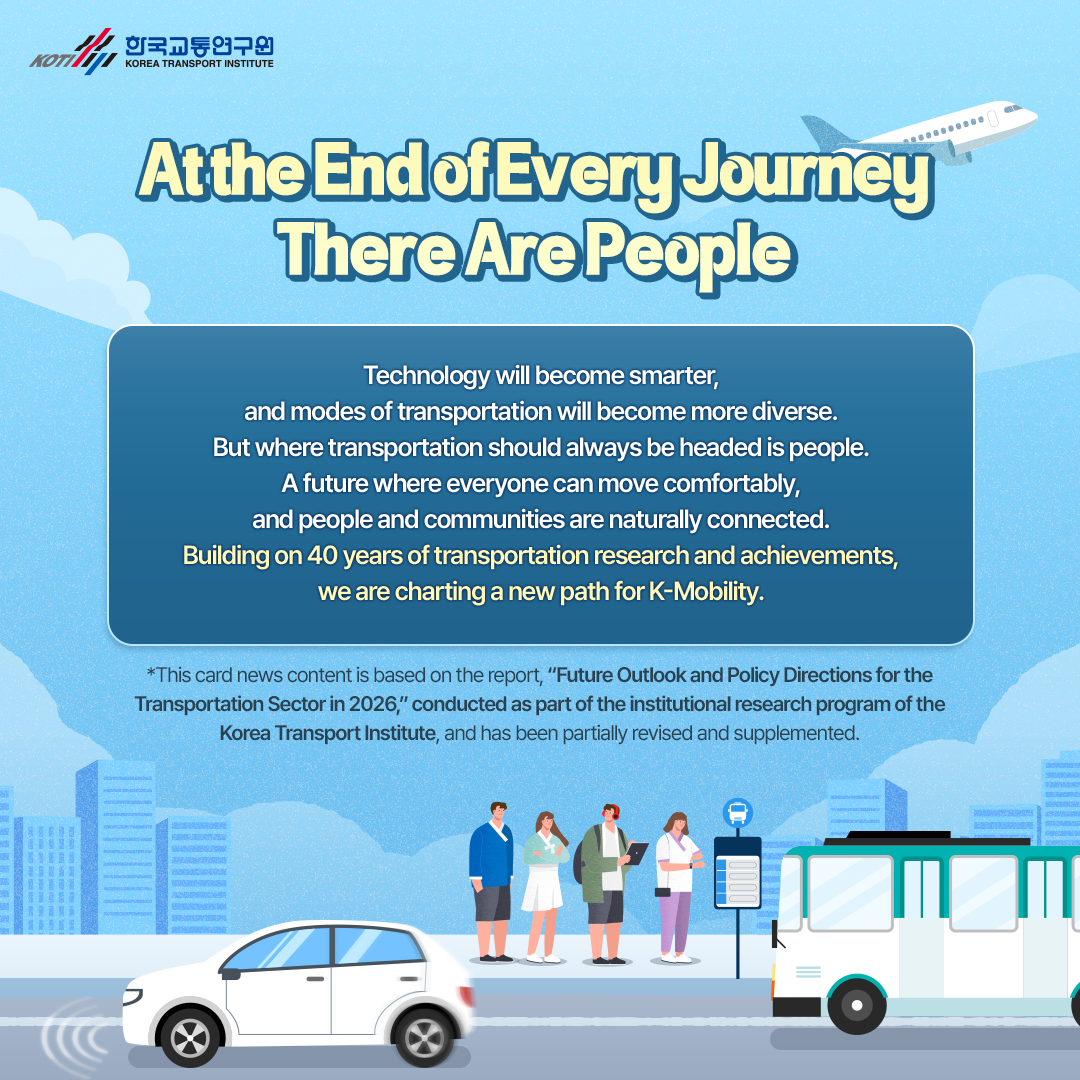
At the End of Every Journey There Are People
Technology will become smarter, and modes of transportation will become more diverse.
But where transportation should always be headed is people.
A future where everyone can move comfortably, and people and communities are naturally connected.
Building on 40 years of transportation research and achievements, we are charting a new path for K-Mobility.
*This card news content is based on the report, “Future Outlook and Policy Directions for the Transportation Sector in 2026,” conducted as part of the institutional research program of the Korea Transport Institute, and has been partially revised and supplemented.