기획도서
연구 지원 및 홍보 목적의 기획도서, 연구실 요청 발간 도서, 통계자료, 번역서, 연구보고서 요약 모음 등의 기획 발간물입니다.

연구
KOTI 교통연구원
KOTI Knowledge Sharing Report_Issue 27_K-Transport (교통혁신 사례집)
- 발간일
2025.04.30
- 저자
정승환
- 언어 / 페이지수
영문 / 119 Page
#한국교통연구원
#K-Transport
#교통혁신사례집
#KOTI Knowledge Sharing Report
#Knowledge Sharing Report
#KSR
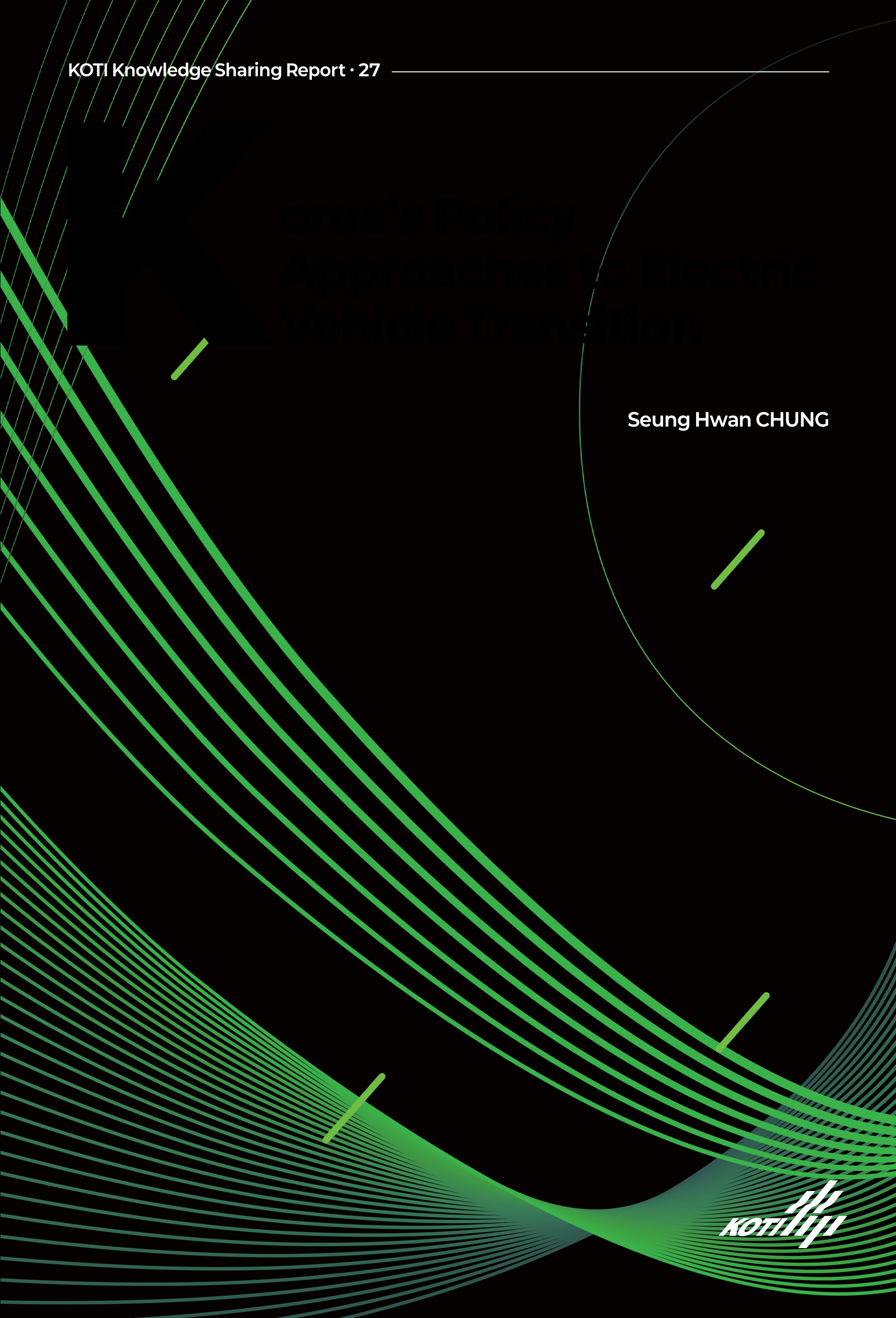
-
교통혁신 사례집 『K-Transport』
[Preface]
The global climate crisis has emerged as one of the most pressing challenges of our time. Policy responses can largely be categorized into two approaches: climate change mitigation, which seeks to reduce greenhouse gas emissions, and climate adaptation, which aims to minimize the impacts and risks associated with climate-induced disruptions. As no single country can resolve this crisis alone, international cooperation has become indispensable. This collective effort has led to the submission of Nationally Determined Contributions (NDCs) by countries around the world, accompanied by growing emphasis on reducing emissions from the transportation sector through the widespread adoption of electric vehicles (EVs).
In line with this global movement, Korea has rapidly strengthened its EV policy framework as part of its national strategy for carbon neutrality. Through comprehensive measures covering vehicle deployment, charging infrastructure expansion, industrial development, and consumer incentives, Korea has positioned the EV transition as both an environmental imperative and a strategic opportunity for technological innovation. Consequently, EV adoption in Korea continues to grow, supported by an extensive charging network, advancements in battery technology, and a robust subsidy scheme.
This report offers a comprehensive overview of Korea’s EV deployment status, policy objectives, promotional measures, and institutional frameworks. It also outlines policy implications and practical strategies for developing countries seeking to adopt EVs in a systematic and sustainable manner.
We hope that the insights contained in this report will enhance global cooperation on climate mitigation and support the broader transition toward environmentally sustainable mobility.
Youngchan KIM
President
Korea Transport Institute -
Chapter 1. | Introduction
1. Definition of Electric Vehicles 2
2. Background of EV Adoption 3
Chapter 2. | Status of EV Adoption in Korea
1. Status of EV Adoption 12
2. Status of EV Charging Infrastructure in Korea 17
Chapter 3. | Korea’s EV Adoption System and Goals
1. Support System for EV Adoption 26
2. EV-Related Legislation and Plans 27
3. Charger Standards and Charging Fee System 43
Chapter 4. | South Korea’s EV Promotion Policies
1. Overview of EV Adoption Policies 50
2. Policies to Promote EV Adoption 51
3. Policies to Support the Installation of EV Charging Infrastructure 58
4. Policies for Providing Information on EVs 60
5. Regulations on Internal Combustion Engine Vehicles 62
Chapter 5. | Strategies for Adopting EVs in Developing Countries
1. Strategies for Adopting EVs in Developing Countries 72
2. Financing Strategies 81
Chapter 6. | Considerations for Building a Sustainable EV Ecosystem
1. Considerations by Stakeholders 94
2. Smart Grids and V2G 95
3. Tax Reform 97
4. Market-Oriented Incentives for EVs 100
5. EV Battery Supply and Management 103
References 106


한국교통연구원 공공저작물은 공공누리 4유형으로
“출처표시+상업적이용금지+변경금지” 조건에 따라 이용할 수 있습니다.
현재 페이지 정보에 대해 만족도 의견을 남기시려면 로그인해주세요.